
Your needs, this model
Does it fit your priorities?
Does the exact Q5 DuoRoller+ page describe an auto-empty rather than charge-only dock package?
Yes. The exact U.S. page lists an Auto-Empty Dock and the manual identifies compatible AED06LRR/AED07LRR models; the exact included AED suffix is not stated.
Explore this need in the finder →Can the Q5 DuoRoller+ join a network where 2.4 GHz Wi-Fi is available?
Yes. The exact English manual says only 2.4 GHz Wi-Fi is supported; 5 GHz-only networks are not supported.
Explore this need in the finder →Is the Q5 DuoRoller+ suitable when cleaning high-pile carpet is essential?
No. Its exact manual says not to use it on high-pile carpets and warns that effectiveness may be reduced on dark carpets.
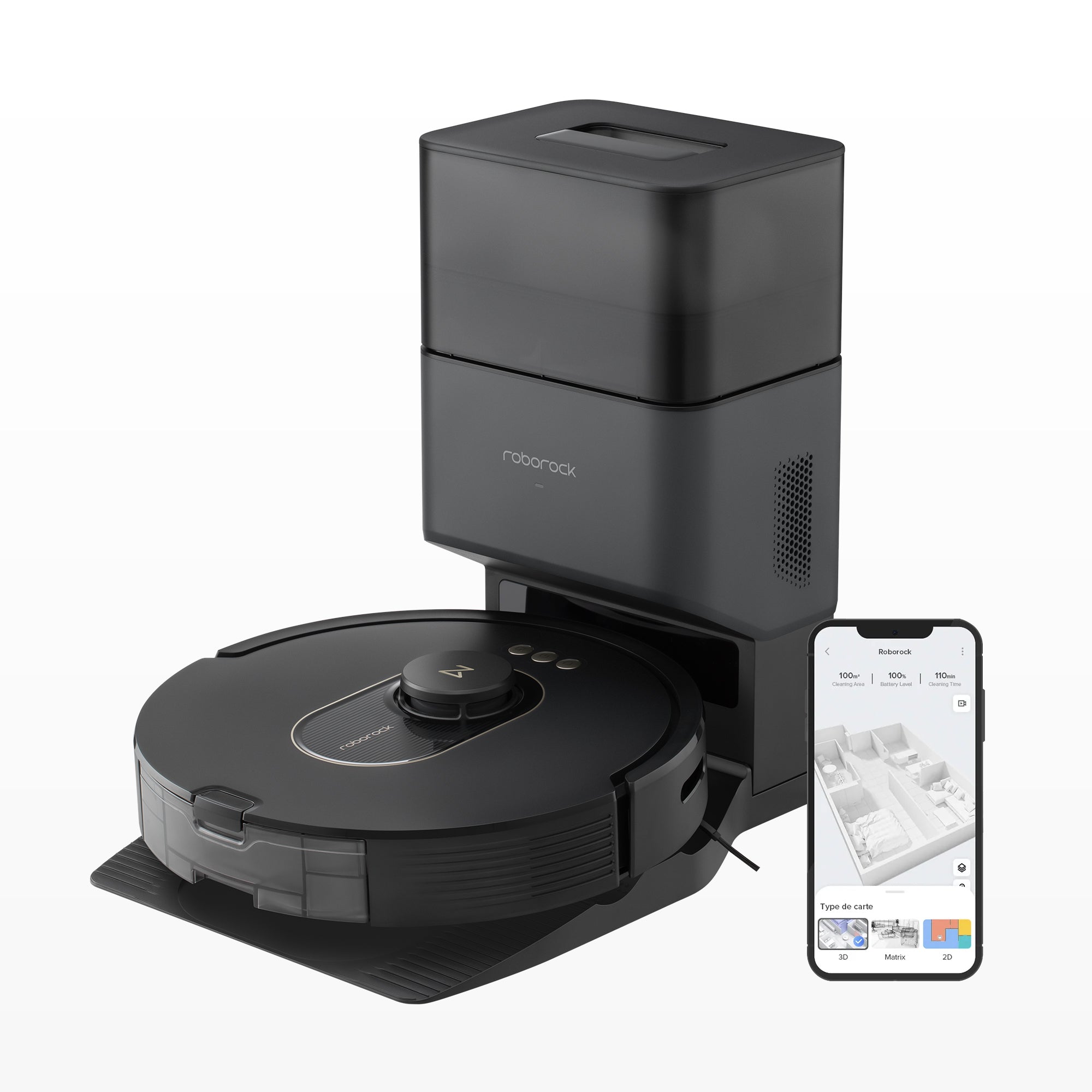
Explore this need in the finder →The Roborock Q5 DuoRoller+ is a U.S.-listed robot vacuum with a black product render, an auto-empty dock and native SKU RR-Q55DuoRollerPlus-M1. Its exact English manual calls the robot Q50ULE. At the time of review, the official page said “Out of stock, coming soon” and its sole native variant was unavailable. That makes this a useful exact-model assessment, not a claim that the offer can be ordered today.
What the name tells you—and what it does not
The page identifies Roborock’s DuoRoller brush, PreciSense LiDAR and a 5,500 Pa maximum suction claim. It also advertises a 99% hair-pickup figure from a Roborock Max+ mode test. Treat that as the company’s own test result, not a third-party comparison or a guarantee for your flooring. The dual main brushes offer a reason to consider this configuration for everyday dry debris, but a named brush design cannot settle pickup at a rug edge or tell you how often it will tangle in your home.
Roborock describes a structured map-and-schedule routine: room selection, no-go zones, up to four map levels, a 3D map option and voice commands for Alexa, Google Home and Apple Siri. The manual’s network instruction is simple: only 2.4 GHz Wi-Fi is supported. A 5 GHz-only network will not work with its app setup. This is a LiDAR mapping vacuum; the exact sources do not document a camera-based object-recognition system, so I would not buy it on an assumption that it can identify and avoid every small item on the floor.
Auto-emptying helps, but the dock code and package list need care
The page calls the dock an Auto-Empty Dock and describes a 2.5-liter E12-rated dust bag that may last up to seven weeks. That is Roborock’s upper-limit claim, and the same page says actual intervals vary with household use. Bag changes remain part of ownership. The page’s box list names the robot, auto-empty dock, side brush, power cable and manual, but does not name a dust bag. The manual diagrams an auto-empty station with a disposable dust bag pre-installed. The separate Q5 Max+ page lists a dust bag but not a side brush. These package lists do not match; I keep them attached to their own offers rather than assuming that one page corrects the other.
There is another unresolved package detail. The Q5 DuoRoller+ manual identifies robot Q50ULE and lists AED06LRR and AED07LRR as compatible auto-empty dock models. The product page says Auto-Empty Dock / RockDock Plus but does not state which exact suffix this native SKU includes. The render cannot resolve it either. The operating plan is clear at the function level—automatic dust transfer into a bag—but the exact dock code for the sold package is not.
A vacuum-only routine, with real floor boundaries
This model does not offer a mop mode. Its box list and exact page do not describe a mop pad, tank or wash station, so it should not be selected for a vacuum-and-mop requirement. For comparison, the Q5 Max+ shares the Q50ULE manual code and the main published operating claims, but is a separate native product/SKU with a different included-item list. That difference matters more for package identity than for the capabilities both pages document.
The manual gives a hard boundary that the sales page’s carpet language cannot override: do not use the robot on high-pile carpets, and expect reduced effectiveness on dark carpet. It publishes no supported high-pile height. If a thick rug is a must-clean surface, choose a model with a positive, exact pile-height statement instead. A low profile is not documented as a selling point either: Roborock lists the robot at 13.9 by 13.8 by 3.8 inches, so measure the lowest furniture opening with room to spare.
The U.S. page lists 770 ml for the robot bin, a 5,200 mAh battery and up to four hours of runtime. Those capacities and “up to” figures are maker specifications, not measured coverage in a real floor plan. The dock itself is listed at 12 by 17.3 by 16.7 inches; the manual asks for a hard, level location, one foot to either side, and three feet in front and above. Check whether that open patch exists before making an auto-empty base part of your room layout.
The bag reduces one chore, not all maintenance
The maintenance schedule is still a weekly routine. Roborock’s manual calls for weekly dustbin and washable-filter cleaning; the filter is replaced every six to twelve months and needs at least 24 hours to dry after rinsing. Main brushes need monthly cleaning and are replaced every three to six months, while the side brush is cleaned as needed. The dock’s dust bag is replaced as it fills, and its air duct can need cleaning. Keep cords and unstable objects off the route, and follow the first full run rather than assuming a mapped path will be obstacle-proof.
Where it fits next to other Roborock choices
Keep the Q5 DuoRoller+ in a comparison when the core need is mapped dry vacuuming, two main rollers and automatic bin emptying. Skip it if mopping, high-pile carpet, 5-GHz-only Wi-Fi or an exact known dock suffix is essential. If you want a mop in the same routine, compare a separate combo such as the Q10 X5+, whose listing documents an automatic-lift pad; it is not the same product or a substitute manual.
Do not choose between the Q5 DuoRoller+ and Q5 Max+ from their names alone. Their inspected U.S. pages share the headline suction, brush, mapping, battery and bag claims, and both manuals identify Q50ULE with the same two compatible auto-empty dock models. Their native IDs and SKUs remain distinct, and their box lists differ. At this source check neither was orderable through its official page. Once that changes, the exact SKU and exact listed package—not the similar name or a promotional render—are the right basis for comparing a retail offer.
Key details at a glance
| Manufacturer-listed maximum suction | 5500 Pa |
|---|---|
| Robot height | 3.8 in |
| Robot weight | 16 lb |
| Manufacturer-reported dock dimension sequence (axes unspecified) | 12 × 17.3 × 16.7 |
| Battery capacity | 5200 mAh |
| Mop system | Vacuum-only; no mop system |
| LiDAR retracts under low furniture | No |
| 2.4 GHz Wi-Fi supported | Yes |
| 5 GHz Wi-Fi supported | No |
| Manufacturer carpet-pile support claim | No |
| Dock water hookup | Standard charging dock; manual bin emptying; no dock water service |
| Fixed water supply and drain required | No |
| Dock empties dust automatically | Yes |
| Maximum manufacturer-claimed base dust capacity window | 49 days |
Use the exact model’s instructions for operating limits, supplied equipment and version differences.
Sources for this assessment

Check the fit before choosing the dock.
Compare your furniture clearance, network, floors and the work the station still asks you to do.