
Your needs, this model
Does it fit your priorities?
Will the Qrevo 2 Pro fit the measured low opening on its route?
Roborock lists the robot at 3.80 inches high. A 4-inch opening is a narrow margin, and a 3.5-inch opening is below the listed body height; measure rugs and route irregularities too.
Explore this need in the finder →Must high-pile carpet be an essential part of the Qrevo 2 Pro's route?
If yes, do not select it: the exact FCC manual says not to use the robot on high-pile carpet. Automatic mop-mount removal is not an exception.
Explore this need in the finder →Is 2.4GHz Wi-Fi available where the dock will be placed?
The exact manual supports only 2.4GHz Wi-Fi. An installation location with only 5GHz does not meet the published setup requirement.
Explore this need in the finder →Can you maintain a removable-tank dock, or is fixed plumbing essential?
This exact package uses clean and dirty removable water tanks, not a fixed supply and drain. Choose the tank option only if you can refill and empty them.
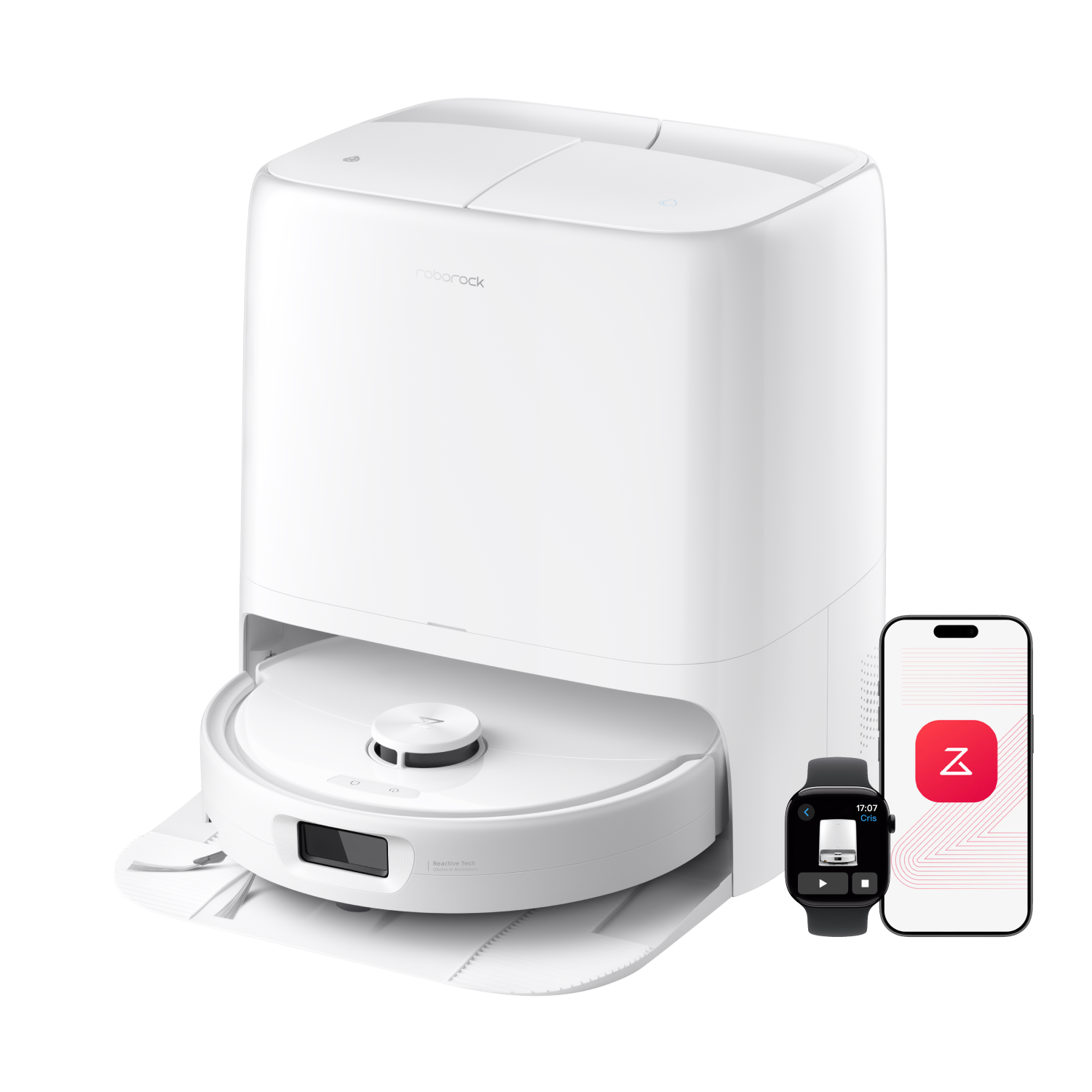
Explore this need in the finder →The Roborock Qrevo 2 Pro is a spinning-pad robot vacuum-mop with an Empty Wash Fill dock. Its exact U.S. manual identifies the robot as RRE0QUI and the dock as EWFD63LRR; the official U.S. listing offers white and black finish SKUs. The mop mounts can detach for carpet cleaning, but that option must be enabled in the app. Roborock's manual still says not to use this robot on high-pile carpet, so the feature is not a waiver of the carpet restriction.
Roborock's product page and support FAQ disagree on suction and dock-wash figures. Treat those maker claims as unresolved, not as independent performance results.
First check the route, Wi-Fi and carpet
Roborock lists the robot at 3.80 inches high. That makes it a conventional round robot rather than a very low-profile choice: a four-inch furniture gap leaves little room for a rug edge, sagging fabric or an uneven floor. Measure the tightest point along the whole route instead of comparing only the nominal gap with the product specification. The dock's published dimensions are 15.83 by 19.45 by 17.72 inches; its manual separately asks for a hard, flat position against a wall with at least 0.82 m of height, 0.42 m of width and 1.2 m of depth. Leave the manual's clearance around the station, not just the footprint.
Roborock lists LiDAR navigation and structured-light obstacle recognition; neither guarantees that every cable, toy or pet accident will be avoided. The manual says to pick up loose cords and valuables before a run, warns that effectiveness may be reduced on dark carpet, and prohibits high-pile carpet. If your required rooms have thick rugs, do not count on mop removal to make this a suitable vacuum.
Setup also has a real network boundary: the exact manual supports 2.4 GHz Wi-Fi only. A home that offers only 5 GHz at the dock location does not meet the published requirement. The main cleaning controls can be used on the robot, but mapping, routines and detailed settings depend on the Roborock app and its current interface.
What the mop-removal feature changes
For a suitable low-pile carpet mixed with hard flooring, the mop mounts can detach at the dock before the robot vacuums carpet and reconnect before it returns to mopping. Roborock says the feature needs to be enabled manually in the app. This can avoid dragging attached wet pads over carpet, while the robot still has dual spinning pads for its hard-floor mopping route. The mops lift for carpet work as well, but neither automatic lifting nor detachment changes the manual's high-pile restriction. If your priority is a roller mop or a fixed cloth rather than rotating pads, compare those mechanisms instead of choosing by suction headlines.
The dock empties dust, washes the pads, refills the robot's onboard water tank and dries the mop cloths. This is a removable-tank setup, not a fixed water inlet and drain, so it can suit a station location without plumbing. You still carry clean water to the dock and empty the dirty-water tank; a dust bag, removable wash tray, mop cloths and filters also remain part of the routine. The robot is not a fully maintenance-free floor system.
The manual says to use cold tap water in the clean-water tank, avoid disinfectant and use only Roborock-recommended cleaning solution. It also says to vacuum the floor at least three times before the first mopping session to limit dirt building up on the pads. Adjust water flow for the floor and conditions, and keep people off the floor until it is dry; the manual warns that recently mopped flooring can be slippery. Do not run over liquid or sticky material.
Read the maintenance schedule before you decide
The self-washing dock reduces some repetitive work but does not remove upkeep. Roborock's manual calls for cleaning the main brushes and washable filter every two weeks, with replacement intervals of six to twelve months. It recommends cleaning the side brush monthly and replacing it every three to six months. Mop cloths should be cleaned as needed, air-dried, and replaced every one to three months. The cleaning tray and filter need rinsing as required, dirty water must be poured out, and the disposable dust bag needs replacement. These intervals are the manufacturer's guidance; the right interval depends on use and visible wear.
Check the exact clearance and station space first, then decide whether you can live with the tank-and-bag chores. The model may suit a home that wants spinning-pad mopping, automatic dust emptying and mop washing, plus the option to remove mop mounts before suitable carpet runs. It is a poor choice if high-pile carpet is essential, the dock cannot get a 2.4 GHz connection, or you cannot provide the station's required clearance.
Do not choose it by an unsettled number
Roborock's Qrevo 2 Pro product and feature pages list 20,000 Pa, while the official support FAQ lists 25,000 Pa for the same named model. The product page gives a 149°F mop-wash claim and says that temperature is measured at the internal heater output; the support FAQ says 167°F hot-water mop washing. Neither document establishes the temperature at the mop, and the difference in official copy is not resolved by the manual. If a precise suction or wash-temperature threshold is essential, do not treat either number as settled. These remain manufacturer claims, not a shared independent pickup or hygiene test. Roborock also labels Target Area Re-Mop as an upcoming over-the-air feature, so do not buy on the assumption that it is already available.
Compare the Qrevo S Pro or QV 35A for other spinning-pad, removable-tank routines, and read the three-model comparison before deciding which exact dock chores and source-backed limits matter most. If your home needs a rolling mop or a plain cloth, the mop-system guide is a better starting point than a headline suction rating.
Key details at a glance
| Robot height | 3.8 in |
|---|---|
| Manufacturer-reported dock dimension sequence (axes unspecified) | 15.83 × 19.45 × 17.72 (manufacturer order; axes not labelled on the page) |
| Battery capacity | 5200 mAh |
| Mop system | Dual spinning or rotating mop pads |
| Warm water supplied for the robot's mop cycle | No |
| LiDAR retracts under low furniture | No |
| 2.4 GHz Wi-Fi supported | Yes |
| 5 GHz Wi-Fi supported | No |
| Manufacturer carpet-pile support claim | No |
| Dock water hookup | Removable dock water tanks |
| Fixed water supply and drain required | No |
| Dock empties dust automatically | Yes |
Use the exact model’s instructions for operating limits, supplied equipment and version differences.
Sources for this assessment
Check the fit before choosing the dock.
Compare your furniture clearance, network, floors and the work the station still asks you to do.