
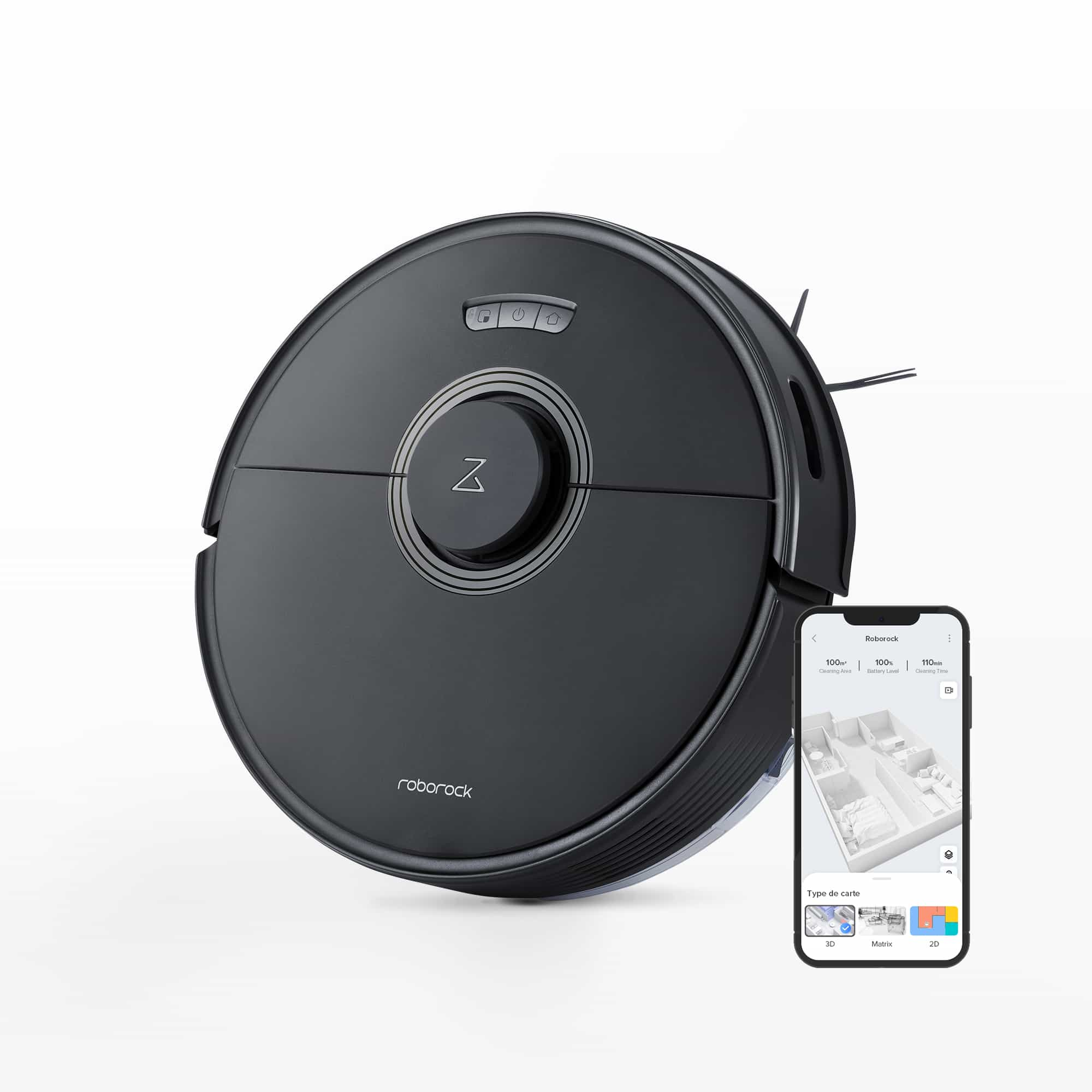
Your needs, this model
Does it fit your priorities?
Does Q7 Max use the 30-level water-flow cloth?
Yes. The exact product page specifies an electronic pump and 30 flow settings; it is not the Q7 M5+/L5 three-level cloth option.
Explore this need in the finder →Does the standard Q7 Max package empty the dustbin automatically?
No. It includes a standard charging dock; the owner empties the robot dustbin. Auto-Empty Dock Pure compatibility is not evidence that the station is in this box.
Explore this need in the finder →Does the Q7 Max dock wash and dry its cloth?
No. This is a charging-only station. The owner fills the robot tank and removes, washes and dries the cloth.
Explore this need in the finder →Can a 3.50-inch opening fit the Q7 Max?
No. Roborock lists 3.80 inches of body height; a nominal 3.50-inch opening is too low. A 4-inch figure still needs real route margin.
Explore this need in the finder →Does Q7 Max work on a 5 GHz-only Wi-Fi network?
No. Its Q380RR FCC manual documents 2.4 GHz only; unknown is not treated as 5 GHz support.
Explore this need in the finder →Can Q7 Max meet a required two-centimetre threshold specification?
No confirmed maximum is stated for this exact configuration. Do not borrow the Q7 M5+ 2 cm claim.
Explore this need in the finder →Can Q7 Max be shortlisted if high-pile carpet support is essential?
No. The exact manual says not to use the robot on high-pile carpet and cautions about dark carpet.
Explore this need in the finder →The Roborock Q7 Max is the standard-dock member of the Q7 Max pair: one LiDAR-mapped robot that vacuums and carries a water-fed cloth, with a charging dock rather than automatic dust disposal. That package distinction matters more than the “Max” name. The separate Q7 Max+ adds an Auto-Empty Dock Pure; the base Q7 Max leaves dustbin emptying to you. Roborock’s U.S. page describes 4,200 Pa maximum suction, simultaneous vacuum-and-mop operation, an electronic water pump and 30 flow settings. Those are listed specifications and modes—not independent pickup or floor-cleaning results.
Thirty flow choices, one manually cared-for cloth
The mop is a flat cloth that attaches to the robot. Roborock says its pump provides 30 water-flow levels and lists 300 g of mop pressure. That is unusually fine adjustment for this simple cloth format, but it does not turn the Q7 Max into a vibrating pad, a pair of spinning pads or a roller that is rinsed while it works. The exact product materials say the robot can vacuum and mop at once; if your main goal is automatic mop washing or drying, this is not that kind of system.
Think of the water function as a maintenance wipe on suitable hard floors, with the owner responsible for filling and emptying the robot tank and washing the cloth. Before using a floor solution, follow the model manual’s water and cleaner directions; do not pour an unapproved chemical into the tank or use hot water. A cloth that has picked up grit or residue needs attention before another run. The low-flow area estimate on the product page—up to 2,583 square feet—assumes a full tank and battery, hard floors and low water flow, with an assumed share of floor area hidden by furniture. It is a manufacturer test estimate, not a promise that your home will be mopped in one run.
LiDAR mapping is helpful, but does not clear the floor for you
PreciSense LiDAR supports mapped routes and app-set room routines; the product page also names multi-floor mapping, no-go zones and voice-assistant integration. A map can make repeatable room selection and scheduled passes easier to manage. It does not establish camera-based recognition of cords, socks, toys or pet waste, and the reviewed exact materials do not list a count of recognized object types. Clear loose objects and supervise the first complete route rather than treating mapping as obstacle-proofing.
The Q7 Max FCC manual identifies the robot as Q380RR and says the app connection uses 2.4 GHz Wi-Fi; a 5-GHz-only setup is not a confirmed fit. It also cautions against high-pile carpet and warns that dark carpet can reduce cleaning effectiveness. The robot’s listed body is about 13.90 by 13.78 inches and 3.80 inches high. A nominal four-inch opening leaves little margin for a rug edge, uneven flooring or sagging fabric, so measure the tightest point along the full route. Roborock’s listed maximum vacuuming-area estimate of 3,229 square feet is tied to its own test conditions, not a measured result in every floor plan.
The dock is the key difference from Q7 Max+
The Q7 Max listing identifies a standard charging dock in its package. Its dock charges the robot; it does not pull dust from the robot, wash the cloth, dry the cloth or refill the water tank. Plan for manual dustbin emptying along with the mop chores. The Q7 Max is also described as compatible with Auto-Empty Dock Pure, but compatibility does not mean the station is included in this standard package. If hands-off dust disposal is essential, compare the separately sold Q7 Max+ package and verify the exact accessory or dock configuration before purchasing.
Roborock’s page states up to three hours of runtime and lists a 5,200 mAh battery. These are maker-published figures, not independent runtime measurements, and actual work depends on settings and the route. The page’s 4,200 Pa title and detailed feature copy conflict with a 4,700 Pa value in its social/meta description. This review uses the repeated 4,200 Pa page title and detailed product specification; the discrepancy is a reason not to make a suction threshold the decisive reason to buy.
Who should shortlist this package?
The Q7 Max is a plausible fit if you want mapped scheduled vacuuming, a simple damp-cloth option and a compact charging base, and are willing to empty dust and maintain the wet parts yourself. It is a poor match for a household that needs automatic dust emptying, dock-washed pads, automatic mop lifting over rugs, a confirmed high-pile carpet rating, a documented crossing minimum or 5-GHz-only setup. Unknown limits should remain unknown; they are not evidence that a robot will clear a threshold or handle a thick rug.
Compare Q7 Max+ if you want its dust-only Auto-Empty Dock Pure package. Q7 M5+ also has an auto-empty dust dock but documents three cloth-flow levels and a separate 2 cm climbing claim; its feature set is not interchangeable with the Q7 Max’s 30-level cloth. Q7 L5 has three flow levels and a standard dock, while its exact U.S. page does not state a threshold figure. The Q10 S5/S5+ use a vibrating cloth, and Q10 X5/X5+ document a different lifting arrangement. Those are meaningful routine differences, not proof of a performance ranking.
The official U.S. listing showed the black and white Q7 Max variants unavailable on the research date, October 24, 2026; that is a dated stock capture, not a discontinuation finding. Its black SKU is RR-Q75Max-M1 and its white SKU is RR-Q70Max-M1. Check current retailer availability and the exact model name. See the Q7 Max U.S. product page, the Q7 Max FCC manual and the Q7 Max / Q7 Max+ comparison.
Key details at a glance
| Manufacturer-listed maximum suction | 4200 Pa |
|---|---|
| Robot height | 3.8 in |
| Robot weight | 8.38 lb |
| Battery capacity | 5200 mAh |
| Mop system | Flat cloth with 30 water-flow levels |
| LiDAR retracts under low furniture | No |
| 2.4 GHz Wi-Fi supported | Yes |
| 5 GHz Wi-Fi supported | No |
| Manufacturer carpet-pile support claim | No |
| Dock water hookup | Standard charging dock; manual bin emptying; no dock water service |
| Fixed water supply and drain required | No |
| Dock empties dust automatically | No |
Use the exact model’s instructions for operating limits, supplied equipment and version differences.
Sources for this assessment
- Roborock Q7 Max Robot Vacuum and Mop with 4200 Pa Power Suction
- Roborock Q7 Max native US product record
- Roborock robot-vacuums-1 native US catalogue record
- Roborock Q7 Max FCC User Manual support article
- Roborock Q7 Max FCC User Manual (English)
- CPSC dated exact-name search: Roborock Q7 Max
- CPSC dated model-code search: Q380RR
- Roborock Q7 Max exact black variant lead product-page image
- CPSC dated exact-name search: Roborock Q7 Max

Check the fit before choosing the dock.
Compare your furniture clearance, network, floors and the work the station still asks you to do.