
Your needs, this model
Does it fit your priorities?
Is 2.4 GHz Wi-Fi available where the base will sit?
The exact US-A02 manual specifies 2.4 GHz Wi-Fi only; a 5 GHz-only network is not confirmed for this robot.
Explore this need in the finder →Should the dock empty dust, wash the two pads and dry them after a mop run?
Dreame lists automatic emptying, dual-pad washing and warm-air drying for the included multifunction base; the owner still cleans its tanks and washboard.
Explore this need in the finder →Can your station location provide removable-tank water service rather than fixed plumbing?
The included base uses removable clean- and used-water tanks. Dreame's separately purchased refill/drainage kit is not assumed to be in this package.
Explore this need in the finder →Do you want two rotating mop pads instead of a roller or flat cloth?
The U.S. product page identifies DuoScrub dual rotary pads; this is not a refreshed roller or passive cloth.
Explore this need in the finder →Is a four-inch passage tall enough for the robot body?
The listed body is 3.83 inches tall, leaving little margin in a measured four-inch opening; the local floor, rug and furniture shape still matter.
Explore this need in the finder →Must the mop holders detach automatically before carpet vacuuming?
No. Dreame's published specification does not give this model automatic mop-holder removal; lifting the pads is not the same operation.
Explore this need in the finder →Is a 10,000 Pa manufacturer maximum your minimum rating?
Dreame lists 10,000 Pa as a maximum based on its own testing; this filter is not an independent pickup measurement.
Explore this need in the finder →Do your rugs require a numerical manufacturer pile-height limit?
No maximum carpet-pile depth is published for this exact model. Unknown cannot pass an essential pile-height requirement.
Explore this need in the finder →Must the dock publish a minimum wash-water temperature?
The reviewed product materials describe pad washing and warm-air drying but give no numerical wash-water temperature; air drying cannot answer a water-temperature requirement.
Explore this need in the finder →Does the 2 cm crossing claim meet the minimum you need?
Dreame lists up to 2 cm for this model, but it is a maximum claim rather than a guarantee for each threshold shape.
Explore this need in the finder →Is the maker's up-to-75-day dust interval a sufficient minimum for your routine?
Dreame describes an up-to-75-day estimate; this is not a guaranteed replacement or emptying schedule for your home.
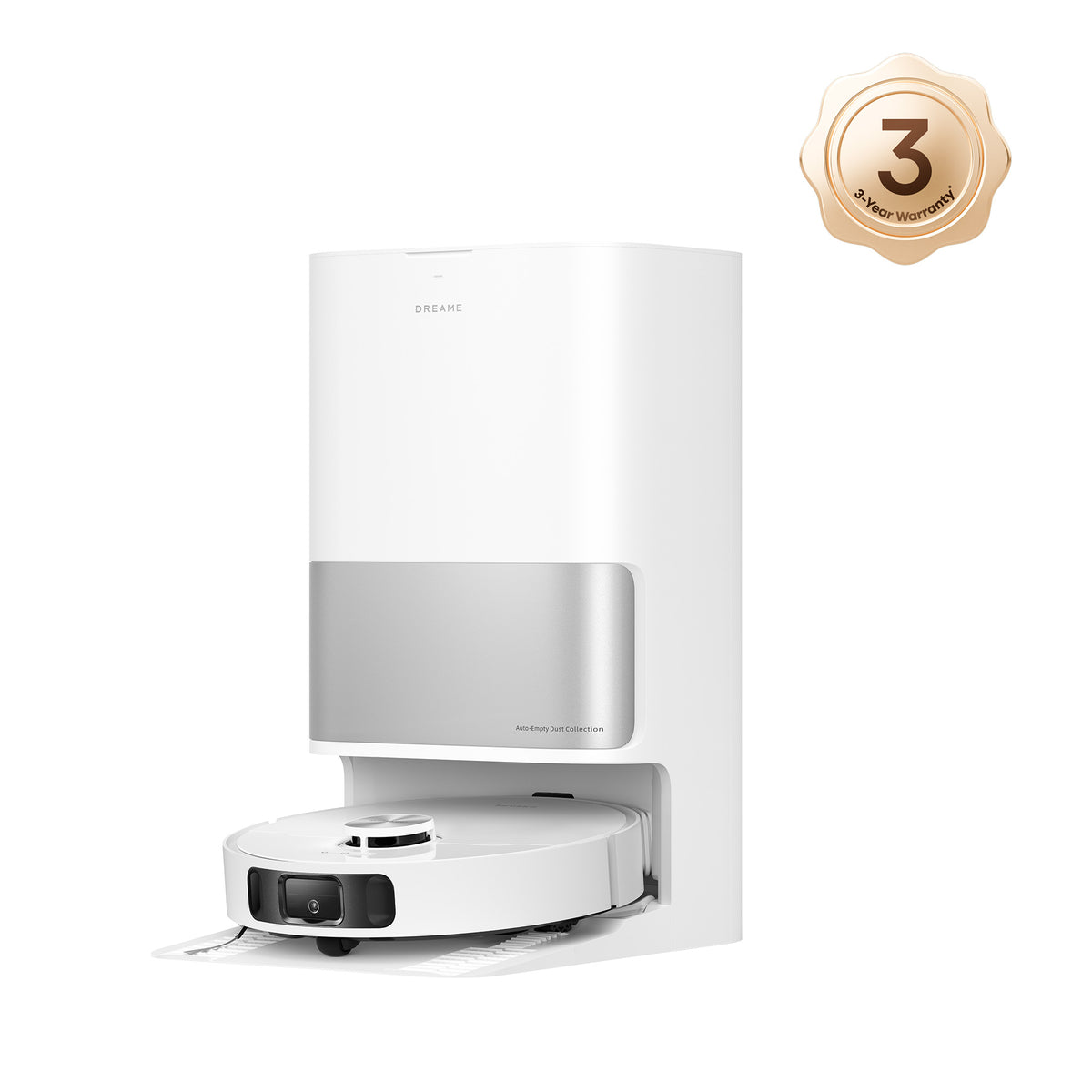
Explore this need in the finder →The Dreame L10s Ultra Gen 2 is a mapped vacuum-mop with a base that empties dust, washes and warm-air dries two rotating pads, and refills the robot from removable tanks. It differs from the similarly named L10s Pro Gen 2, whose small RCS0 dock only charges and leaves bin and mop work to you. The observed U.S. native listing showed this SKU unavailable; that is a point-in-time status, not a future stock promise.
A useful dock, but it needs a real place in the room
The exact U.S. offer is native SKU 010204AA000965. Dreame’s US-A02 manual identifies the L10s Ultra Gen 2 family as robot RLL32SE/RLL32SE-1 with base-station alternatives RCLE0304/RCLE0304-3. The manual does not tie that offer SKU to one station suffix, so the precise suffix is not asserted. It does state 120 V, 60 Hz input for both listed bases, which makes this a much better U.S. electrical reference than a similarly titled EU manual.
The robot is listed at 350 × 350 × 97.2 mm, about 13.78 inches wide and 3.83 inches tall. That leaves just 0.17 inch in a nominal four-inch opening; measure the lowest unobstructed point, including a rug edge and the floor below furniture. The base is about 18 × 13.39 × 23.25 inches, before considering its approach area. The manual asks for roughly 60 inches clear in front and two inches at each side. The base may fit against a wall while still being a poor fit for a narrow alcove or a path blocked by a door.
It reduces mop chores; it does not eliminate them
Dreame’s U.S. materials describe DuoScrub dual rotating pads, dock washing and warm-air drying. The base also transfers dust to a 3.2-liter bag, draws from a 4.5-liter clean-water tank to refill the robot, and automatically adds cleaning solution. The company’s “up to 75 days” dust-emptying interval is a manufacturer estimate, not a dependable service schedule for every household. Pets, debris, number of runs and room size change how often the base needs attention.
Water service is tank-based in the ordinary package, not a fixed supply and drain. The auto-refill/auto-drainage kit is a separate purchase; do not count it as included or necessary for the standard tank arrangement. After mopping, you still have to empty the used-water tank to avoid stale-water odor. The manual calls for regular clean-tank care, monthly washboard cleaning and dust-bag replacement on an approximately two-to-four-month schedule. A dock that washes pads makes the day-to-day routine easier, but it still contains water and dirt that need owner attention.
There is a subtle distinction between the base drying the pads with warm air and the water used to wash them. Dreame publishes no numeric dock wash-water temperature in the reviewed U.S. materials. If a stated 75°C, 80°C or 100°C pad-wash temperature is essential, this model does not meet that documented requirement. Nor does a warm-air drying claim mean that warm water is supplied to the floor during mopping.
Good questions for carpets, thresholds and the network
Dreame lists a 10.5 mm mop-lift claim and ultrasonic carpet recognition. Lifting is useful separation from an ordinary flat pad, but it does not say how much pile the robot can vacuum or prove that the pads clear a plush rug. The mop holders do not automatically detach. If you need the robot to leave the mop hardware at the base before a carpet run, this is the wrong mechanism. The manual’s floor-use cautions still matter; do not read a lifting feature as a general permission to mop rugs.
The page lists up to 2 cm threshold crossing. This is a maker maximum, not a route guarantee: edge shape, angle, floor grip and the robot’s approach can matter more than the headline. Measure the actual transition and keep margin instead of assuming it will cross a tall or sharp-edged sill.
Setup and mapping require the app, and the US-A02 manual specifies 2.4 GHz Wi-Fi only. A 5 GHz-only network at the station location is a practical incompatibility. Dreame lists a 10,000 Pa maximum suction figure based on its own testing; that number is not independent pickup evidence and cannot predict results on a particular rug. Use the fit, dock arrangement and maintenance plan as the firmer buying distinctions.
Which Dreame routine is the better fit?
Choose this L10s Ultra Gen 2 configuration if you want dual rotating pads and want the included base to empty dust, wash and dry the pads, and refill the robot without plumbing. It suits a household willing to keep removable tanks and the washboard clean, with enough floor area for the station’s approach space. Skip it if the robot must pass beneath furniture lower than its body, needs automatic pad-holder removal, must handle a known deep-pile rug, or must satisfy a numerical dock-wash temperature requirement that Dreame has not published here.
Compare the Dreame L10s Pro Gen 2 if a much smaller charging dock is more important than automation: it uses rotating pads too, but you empty its robot bin and wash the pads by hand. If you want the middle ground, the Dreame D20 Pro Plus has a dust-emptying station but a different, owner-managed mop routine. These are changes in how the machines are supplied and maintained, not a claim that one will clean every home better.
The page separately describes the TriCut brush as an accessory, while the included-items list does not establish it as part of this SKU’s ordinary carton. Do not assume a sale banner makes the brush standard equipment; check the specific retail package if that brush is the reason for choosing the offer. Dreame’s product page and U.S. US-A02 owner manual are the relevant places to confirm setup and care for this model family before buying.
Key details at a glance
| Manufacturer-listed maximum suction | 10000 Pa |
|---|---|
| Robot height | 3.83 in |
| Robot weight | 8.82 lb |
| Manufacturer-reported dock dimension sequence (axes unspecified) | 18.00 x 13.39 x 23.25 in (converted from the listed dimensions) |
| Maximum manufacturer-listed threshold claim | 2 cm |
| Battery capacity | 5200 mAh |
| Mop system | Dual spinning or rotating mop pads |
| Dock clean-water tank | 4.5 L |
| 2.4 GHz Wi-Fi supported | Yes |
| 5 GHz Wi-Fi supported | No |
| Dock water hookup | Removable dock water tanks |
| Fixed water supply and drain required | No |
| Dock empties dust automatically | Yes |
| Maximum manufacturer-claimed base dust capacity window | 75 days |
Use the exact model’s instructions for operating limits, supplied equipment and version differences.
Sources for this assessment

Check the fit before choosing the dock.
Compare your furniture clearance, network, floors and the work the station still asks you to do.