
Your needs, this model
Does it fit your priorities?
Is 2.4 GHz Wi-Fi available where the charging dock will sit?
The exact-title manual states that only 2.4 GHz Wi-Fi is supported; a 5 GHz-only network is not enough.
Explore this need in the finder →Is a basic charging dock acceptable, with you emptying the robot bin and washing pads?
The included RCS0 dock charges only. It does not auto-empty dust or wash/dry mop pads.
Explore this need in the finder →Do you want dual rotating mop pads rather than a flat cloth or another mop mechanism?
Dreame describes the exact model’s DuoScrub as two rotary pads, which remain owner-managed after use.
Explore this need in the finder →Must the robot automatically remove its mop holders before carpet vacuuming?
No; the page’s specifications say the mops do not auto-remove. Hand removal is part of the owner’s routine.
Explore this need in the finder →Is a 7,000 Pa manufacturer-listed maximum the minimum you need?
Dreame lists 7,000 Pa based on its own laboratory testing; it is not an independent pickup measurement.
Explore this need in the finder →Do your rugs require a manufacturer-published maximum carpet-pile height?
No exact maximum pile height is stated for this model. The unknown cannot satisfy a required height limit.
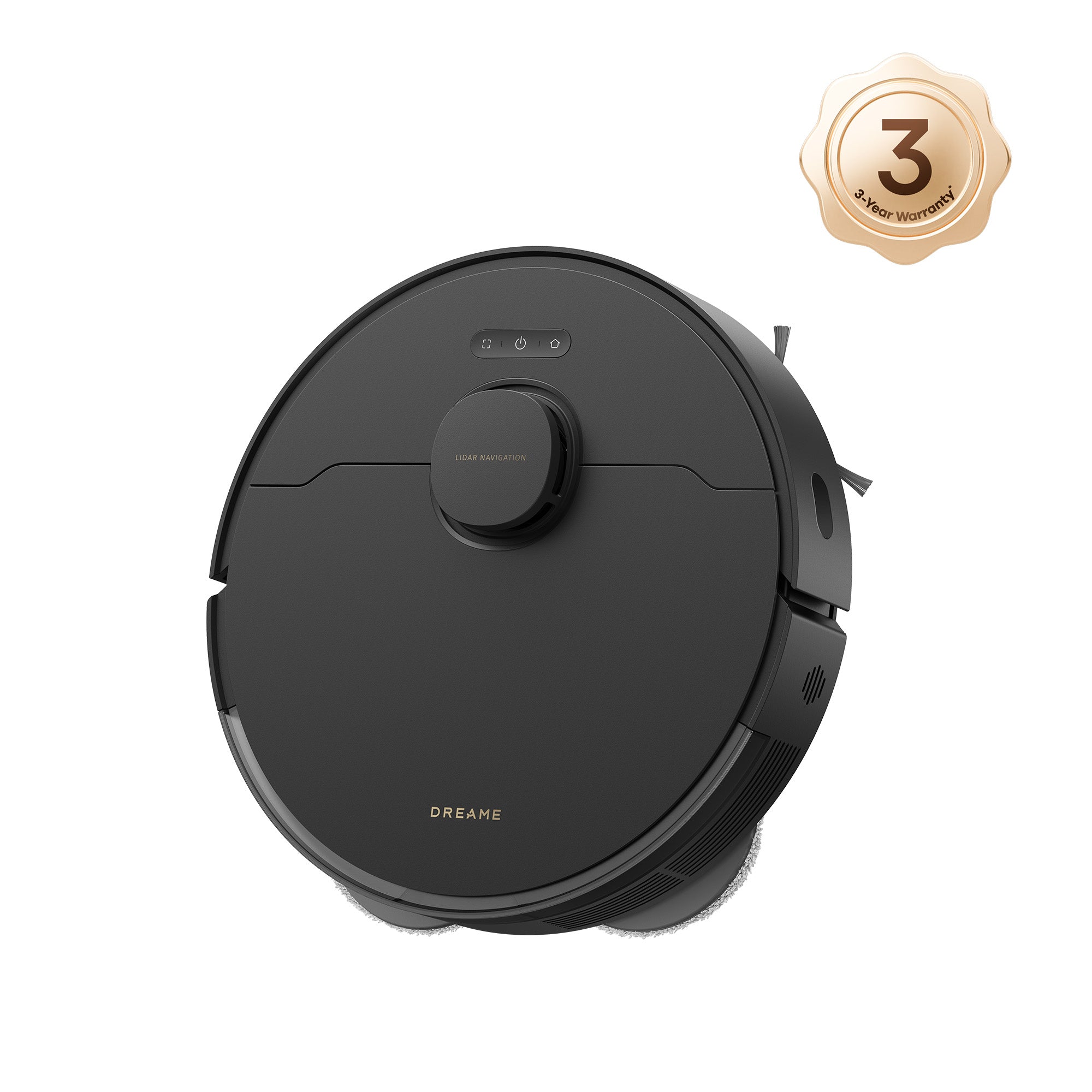
Explore this need in the finder →The Dreame L10s Pro Gen 2 is a mapped robot vacuum-mop sold in the U.S. as native product 8766186586317, SKU 010201AA000290. Dreame’s exact-name support article publishes a manual titled “L10s Pro Gen 2 User Manual”; that document names the robot RLL42SDA and the RCS0 charging unit. The manual is revision RLL42SDA-EU-A01, not a U.S.-specific edition, so the regional label matters. Its listed 100–240 V dock input covers ordinary U.S. supply, but the manual does not declare a U.S. nominal-voltage variant. The official U.S. product page showed Sold Out in the checked snapshot; that says nothing about future stock or other sellers.
A mapped robot with a small charging station
The robot is listed at 350 × 350 × 97 mm, or about 13.78 inches across and 3.82 inches tall. Check the lowest crossbar, bed rail, furniture lip and rug edge before assuming it fits under a cabinet. The compact RCS0 dock measures about 130 × 126 × 92.6 mm. Dreame’s manual still asks for open approach space: about 1.5 m in front and 0.5 m at each side. That leaves a useful contrast between a physically small dock and the clearance its return path needs.
It uses LDS mapping, app-controlled routes and up to four saved maps. The manual says setup uses 2.4 GHz Wi-Fi only. If the network at the dock location is 5 GHz-only, that is a hard incompatibility, not a minor setup preference. The product page also advertises 3DAdapt obstacle avoidance; the manual shows a line-laser sensor, LDS, bumper and cliff sensors. Those labels do not establish that the robot will recognize every cable, sock, pet toy or other small object. Clear the route and use boundaries for places where a collision or tangle matters.
What the suction and carpet claims do—and do not—tell you
Dreame lists a 7,000 Pa maximum and says that figure comes from its laboratory testing. Treat it as the maker’s maximum rating, not a measured pickup result in a furnished room. The product page describes ultrasonic carpet recognition, increased suction in its intelligent carpet mode and two mop pads that rise by 7 mm. The footnote defines that 7 mm as the robot’s height difference before and after lifting; it is not a 7 mm guarantee of carpet clearance. The company publishes no exact maximum pile height for this model, and its manual does not recommend mopping carpets. If pile depth, carpet protection or automatic removal of the mop holders is essential, the evidence here cannot clear that requirement.
Rotating pads mean hands-on mopping care
DuoScrub uses two rotating pads and a 300 ml water tank carried on the robot. This is not the L10s Ultra package with a wash-and-dry station: the included RCS0 base charges the robot but does not empty its dust, wash or dry pads, refill water, or connect to plumbing. The 470 ml onboard dust box remains your job to empty. Before mopping, the owner fills the robot tank with clean water and installs the two pad holders and pads. After a run, the manual directs you to remove the mop assembly and wash the pads; when the robot is charging or idle, remove the mop module, empty leftover water and clean the pads to reduce odor and mold. It warns against detergent, disinfectant and hot water in the tank, and recommends against mopping carpets.
That routine may be acceptable if you want rotating pads without a tall multi-function dock and do not mind attending to each mop run. It is a poor fit if you expect a station to take over dust-bin emptying or mop sanitation. The page’s specifications say that the mops do not auto-remove. The pads can be removed by hand for care, but the robot does not automatically detach their mounts before a vacuum-only carpet pass.
Do not buy on the runtime headline alone
The page describes a 5,200 mAh battery, up to 155 minutes in Quiet Mode, and coverage up to 1,560 square feet under Dreame’s stated test conditions. Elsewhere on the same page, the headline feature summary calls out a 105-minute runtime. Because those manufacturer figures conflict, this assessment does not use one runtime number as a reliable comparison or promise. Actual cleaning time also depends on the selected suction and mop settings, route and home. A similar caution applies to the maker’s suction figure: the number is a spec claim, not an independent performance measurement.
Who should shortlist it
This is worth considering if you want a lidar-mapped vacuum-mop with dual rotating pads, can connect it to a 2.4 GHz network, and are comfortable emptying the bin and cleaning the pads yourself. The charging dock is notably smaller than a wash/dry station, but you still need the manual’s clear approach space. It is not the right answer when you require automatic dust emptying, dock-washed pads, mop-mount removal, a documented high-pile limit, or a 5 GHz-only connection.
For an even simpler mop routine, the Dreame D9 Max Gen 2 uses a removable flat pad rather than rotating pads, also with a charging-only dock. If bin and pad chores are the reason you are shopping, compare the Dreame L40 Ultra Gen 2: its separately documented station adds dust auto-emptying, pad washing and drying, and water refilling, along with a larger footprint and tank maintenance. Those are meaningful changes to ownership, not proof of better cleaning in your home. Match the station, network, route and maintenance you can actually support rather than treating the largest Pa number as a verdict.
Key details at a glance
| Manufacturer-listed maximum suction | 7000 Pa |
|---|---|
| Robot height | 3.82 in |
| Robot weight | 8.25 lb |
| Manufacturer-reported dock dimension sequence (axes unspecified) | 5.12 × 4.96 × 3.65 in (converted from listed dimensions) |
| Battery capacity | 5200 mAh |
| Mop system | Dual spinning or rotating mop pads |
| 2.4 GHz Wi-Fi supported | Yes |
| 5 GHz Wi-Fi supported | No |
| Dock water hookup | Standard charging dock; manual bin emptying; no dock water service |
| Fixed water supply and drain required | No |
| Dock empties dust automatically | No |
Use the exact model’s instructions for operating limits, supplied equipment and version differences.
Sources for this assessment
- Dreame U.S. L10s Pro Gen 2 product page
- Dreame U.S. native product and variant record
- Dreame current U.S. robot-vacuum collection row
- Dreame Support article: L10s Pro Gen 2 User Manual
- Official attachment record: L10s Pro Gen 2 User Manual.pdf
- Dreame L10s Pro Gen 2 User Manual; model RLL42SDA / RCS0 supply unit
- Exact Dreame U.S. black L10s Pro Gen 2 robot manufacturer render

Check the fit before choosing the dock.
Compare your furniture clearance, network, floors and the work the station still asks you to do.