
Your needs, this model
Does it fit your priorities?
Can the robot use a 2.4 GHz network at its dock, or is your home 5 GHz-only?
The D9 Max Gen 2 manual supports 2.4 GHz and explicitly says 5 GHz is not supported.
Explore this need in the finder →Is a basic charging dock enough, with you emptying the bin, or is automatic dust emptying essential?
The U.S. package includes a standard charging dock only; it does not transfer dust out of the 570 ml robot bin.
Explore this need in the finder →Would you accept a detachable, owner-filled flat mop pad that you remove and wash after use?
The exact product page and manual document a removable flat pad and owner-filled 235 ml tank, with manual washing and air-drying.
Explore this need in the finder →Does a manufacturer-listed maximum of 2 cm meet the route need, or must 3 cm be documented?
Dreame lists 20 mm and describes a lab test; no larger figure is confirmed, and actual transitions vary.
Explore this need in the finder →Do your rugs require an explicit high-pile rating, or is that limit not essential?
The manufacturer does not publish a supported high-pile depth for this exact model; unknown suitability is not a pass when pile height is essential.
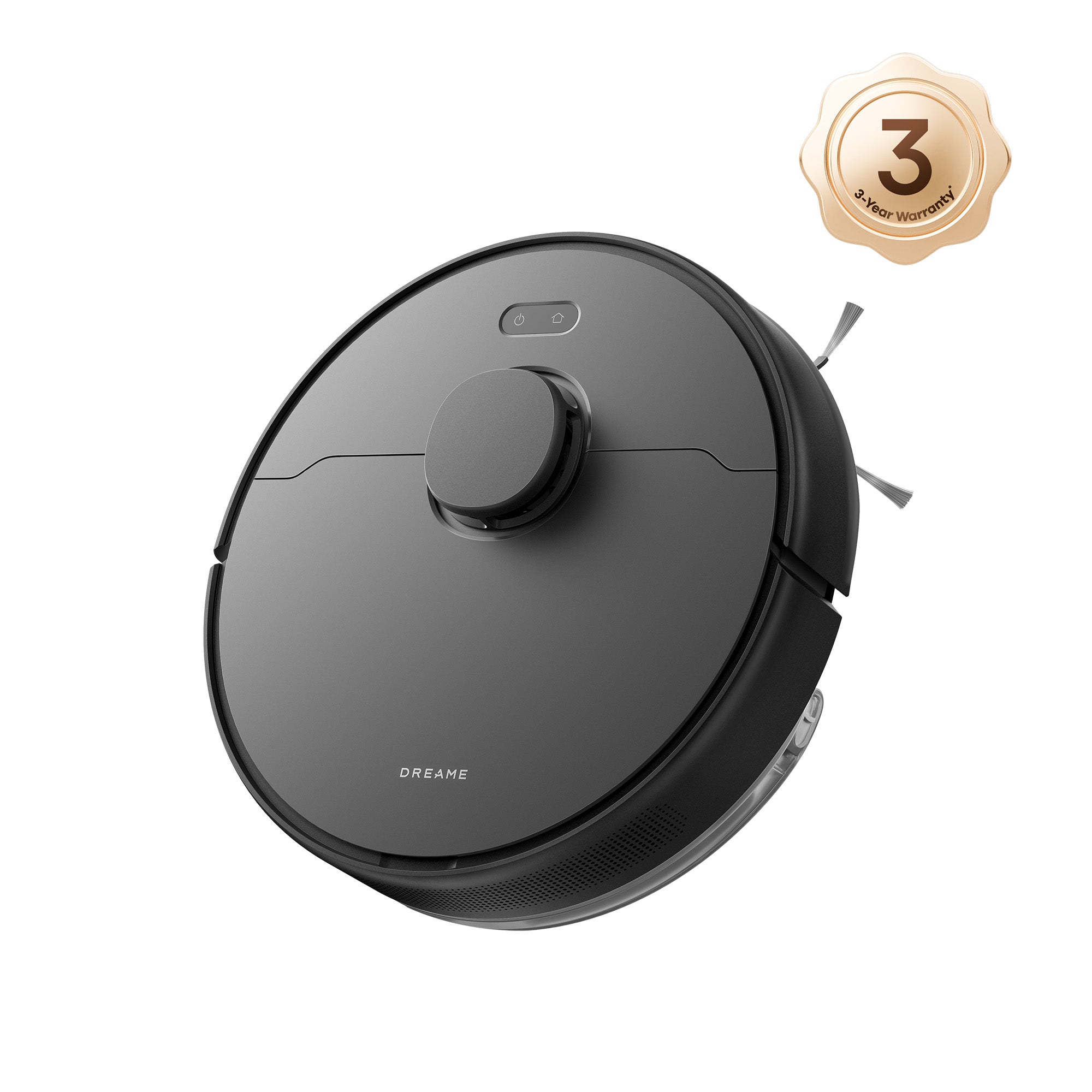
Explore this need in the finder →The Dreame D9 Max Gen 2 is a mapped vacuum-and-mop robot with a small standard charging dock, not a dust-emptying or mop-washing station. Dreame’s U.S. record lists one product SKU, 010204AA000348; its English manual names the robot RLD34GA and charging dock RCS0. The distinction matters more than the headline suction number: owners empty the robot’s 570 ml dust box and handle the mop cloth and water themselves.
A straightforward mapped vacuum, with ordinary chores left to you
The product page lists a 6,000 Pa maximum, a 5,200 mAh battery, and a floating rubber main brush. These are manufacturer specifications, not a pickup test against other robots. Dreame also advertises up to 224 square metres per charge in quiet vacuuming and up to 285 minutes in quiet vacuum-and-mop operation. Those are stated test conditions, not a promise for higher suction, a complicated layout, thick rugs, or any particular home. Treat the numbers as context, then decide whether a robot that returns to its charging dock and resumes a low-battery run matches your routine.
The 570 ml bin stays on the robot. The included dock is a charging base; it does not transfer dust to a bag. That keeps the station small—Dreame lists it at about 5.1 by 5.0 by 3.7 inches—but it also means more frequent hands-on emptying than with an auto-empty base. Choose it only if emptying the bin yourself is acceptable. A bagless robot bin is not the same as a long-interval dust station.
Plan the mop as a separate task
The second job is a detachable flat pad fed by a 235 ml tank on the robot. Dreame lists three water-flow levels. The manual asks you to dampen the pad, fill the tank, install the mopping module, and remove it after the run; then wash and air-dry the cloth and pour out unused water. It advises against mopping carpet, and says not to add detergent, disinfectant, or hot water. The product’s specification table also marks automatic mop removal and mop lifting absent. So this is not a safe “leave the pad on and let it sort out rugs” setup: use vacuum mode on carpet, remove the module when it is not mopping, and choose a different robot if you need a dock to wash and dry the mop for you.
That division can still be practical in a mostly hard-floor home that wants occasional damp maintenance and has someone willing to prepare the robot. It is less appealing when mopping is a daily unattended chore, when the home mixes rugs and hard floors on a single route, or when avoiding direct contact with a used cloth is important. The tank is small by design and belongs to the robot; there is no dock water tank, fixed supply, or drain hookup to install.
Measure the route and check the network first
The body is listed at 350 by 350 by 96.8 mm, or about 13.8 inches wide and 3.81 inches high. A four-inch opening is only a nominal fit with little margin. Measure the lowest point along the entire route, including rugs, furniture trim, floor transitions, and any sagging fabric. Dreame’s up-to-20-mm threshold claim is lab-tested and expressly depends on the home environment; it is not a guarantee that the robot will climb every sharp, loose, or slippery transition.
The manual supports 2.4 GHz Wi-Fi and explicitly says 5 GHz is unsupported. If the only network at the dock location is 5 GHz, this is a poor fit for app mapping and remote controls. The app adds fast mapping, schedules, virtual boundaries and saved multi-floor maps; the manual still describes direct start and spot-cleaning controls. Do not treat its “Smart Pathfinder” marketing as proof of camera-based object recognition. The manual identifies laser distance, bumper and cliff sensors, but the material reviewed does not establish a dedicated object-recognition system. Pick up cords and small objects and use a no-go area where the map helps.
Maintenance and the better alternative
This model has fewer station chores because it does not wash, dry, refill, or empty anything automatically. The trade is that the owner does the work: empty the dust box, clear hair from the floating brush, clean the filter and let rinsed parts dry fully, and rinse and air-dry the pad after every mop run. The manual suggests checking the main brush every two weeks and gives replacement intervals that vary with use. A simpler base is not maintenance-free; it just moves the maintenance back to the person using it.
Compare it with Dreame’s D20 Plus only if dust-bin handling is your sticking point. That separate U.S. package adds bagged dust auto-emptying, but its flat pad still needs manual water and cloth care. A dock-washed-pad robot is a different class of solution and adds a larger station and its own water-tank routine. The D9 Max Gen 2 is best suited to someone who values mapped vacuuming, wants the option of a simple detachable damp pad, can empty a 570 ml bin, has 2.4 GHz Wi-Fi available, and has measured openings and thresholds that fit its published bounds. It is not the choice for hands-off dust disposal, unattended mixed-floor mopping, verified high-pile suitability, or a required mop-washing dock.
Sources
For the model’s listed functions and limits, see Dreame’s U.S. D9 Max Gen 2 specifications and the official D9 Max Gen 2 English manual, which identifies the RLD34GA robot and RCS0 charging dock. Manufacturer suction, runtime, coverage and threshold figures are not independent test results.
Key details at a glance
| Manufacturer-listed maximum suction | 6000 Pa |
|---|---|
| Robot height | 3.81 in |
| Robot weight | 7.08 lb |
| Manufacturer-reported dock dimension sequence (axes unspecified) | 5.12 x 4.96 x 3.67 in (converted from manufacturer dimensions) |
| Maximum manufacturer-listed threshold claim | 2 cm |
| Battery capacity | 5200 mAh |
| Mop system | Detachable flat pad; owner fills tank and washes cloth |
| 2.4 GHz Wi-Fi supported | Yes |
| 5 GHz Wi-Fi supported | No |
| Dock water hookup | Standard charging dock; manual bin emptying; no dock water service |
| Fixed water supply and drain required | No |
| Dock empties dust automatically | No |
Use the exact model’s instructions for operating limits, supplied equipment and version differences.
Sources for this assessment
- Dreame U.S. D9 Max Gen 2 product page
- Dreame U.S. native product/variant record
- Dreame official D9 Max Gen 2 manual listing
- Dreame D9 Max Gen 2 English user manual; robot RLD34GA and charging dock RCS0
- Dreame U.S. support listing for R2422L-D9 MAX Gen 2 (Black) manual
- Exact Dreame U.S. D9 Max Gen 2 black robot product render

Check the fit before choosing the dock.
Compare your furniture clearance, network, floors and the work the station still asks you to do.