
Your needs, this model
Does it fit your priorities?
Does this exact Stratos configuration use a sonic single-pad system rather than a roller or spinning pair?
Yes. Shark calls RV2720ZE Sonic Mopping and says the pad scrubs up to 100 times per minute. The movement rate is a manufacturer claim, not an independent stain-removal result.
Explore this need in the finder →Do you want the included dock to wash and dry the pad, as well as refill water and empty dust?
The exact RV2720ZE offer describes all three dock functions, with pad washing/drying after every mission. The listed 60-day dust and up-to-30-day refill windows are capacity claims, not guaranteed periods between household service.
Explore this need in the finder →Is a published minimum pad-wash temperature essential?
Shark says this base washes and dries the pad but publishes no exact RV2720ZE wash temperature on the reviewed offer. It should not pass a minimum-temperature requirement; a different Shark model's heated-base claim is not transferred.
Explore this need in the finder →Can you require a numeric robot height to check low furniture?
No robot-only height is confirmed by the exact page. Its overall product dimensions are not assigned to the robot, dock or assembly, so this model cannot be promised to fit a measured low opening.
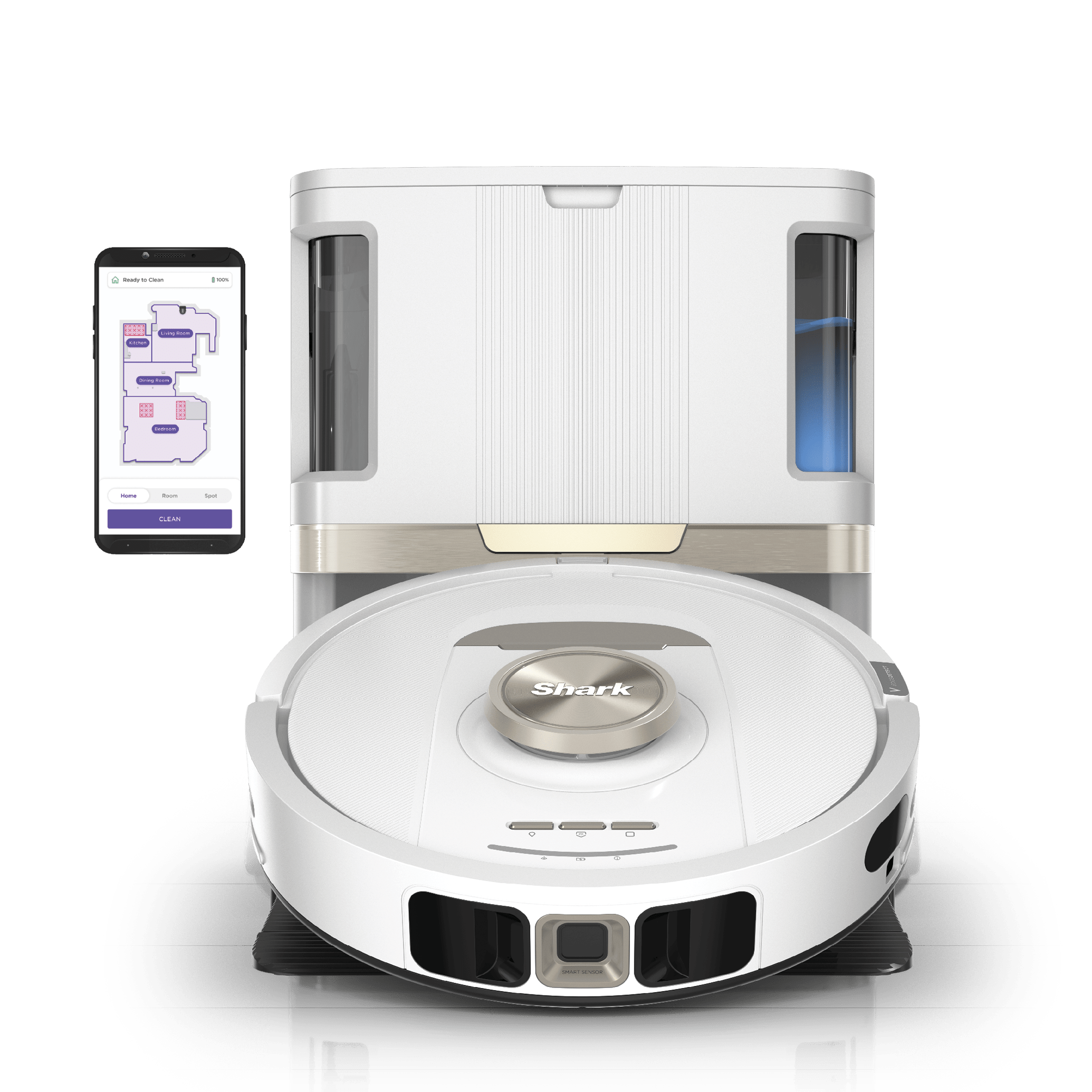
Explore this need in the finder →The Shark Stratos RV2720ZE is a robot vacuum-mop for someone who wants more than a dust-emptying dock. Its listed NeverTouch base empties dust, refills the robot's water tank, and washes and dries the mop pad after a cleaning. The appeal is the routine: let the base do more of the between-run handling while retaining a reusable pad and wet-cleaning option. It is not a maintenance-free cleaner, and the manufacturer's “up to” capacity windows should not be read as a guaranteed calendar schedule for your home. Shark's page does not say whether water service is by removable tanks or fixed connections, so that point needs checking if it determines where your dock can go.
One package combines vacuuming, sonic mopping and dock care
SharkNinja identifies the U.S. model as RV2720ZE and calls it the Stratos 2-in-1 Robot Vacuum and Mop. The exact offer includes the wet-and-dry robot, a 60-day-capacity auto-empty base with refill and pad washing, two side brushes, two antimicrobial mop pads, a 12-ounce starter bottle of Shark Multi-Surface Cleaner, an odor-neutralizer assembly and a post-motor base filter. That box list matters: this is not a vacuum-only Stratos with an optional mop attachment, and the base is not merely a charger.
The single mop pad uses Shark's Sonic Mopping system. Shark says it scrubs hard floors up to 100 times per minute and advertises a relative stain-cleaning advantage against a named competing robot. Those are manufacturer claims, not independent tests or a promise for every stain, floor finish or dried spill. If your priority is routine dust pickup on carpet and hard floors, the vacuum function is separate from how often you choose wet cleaning. If your priority is a particular floor-safe water temperature, however, the RV2720ZE page does not publish one for the pad wash or the robot's mop cycle.
Less pad handling, but not zero station work
The included base is the product's main practical difference from a simpler self-empty robot. Shark describes an automatic dust transfer into a bagless bin with capacity for up to 60 days, water refill for up to 30 days, and washing and drying of the mop after each mission. These are capacity and maintenance claims, not a measured household service interval. Pets, room size, run frequency and dirt load can change how soon you need to empty or refill. The dock, water handling, wash area, filters and pads still require attention; automatic pad care does not make the station self-maintaining or inspect the robot for wrapped hair.
The listed 12-inch cleaning-path width is not a robot-body width or a clearance measurement. Shark's page gives overall product dimensions and weight without making clear whether those numbers describe the robot, base or combination, so they should not be used to decide whether the robot fits below a sofa. The page also does not give a numeric threshold limit, supported carpet-pile height, numeric suction in pascals, water-tank volume or specific Wi-Fi band. If any of those is a deal-breaker, measure the opening and consult the exact setup guide before choosing; a broad “Autolift” or “works on carpet” claim is not a substitute for the missing dimension or route limit.
Navigation and filtration claims have useful limits
Shark lists 360-degree LiDAR mapping, object detection and avoidance, Edge Detect, and Autolift. Edge Detect uses directed air to move debris toward the cleaning path, while Autolift is described as helping the robot cross obstacles and keeping the mop off rugs and carpets. These features make a mapped mixed-floor routine plausible, but they do not guarantee that every cord, tassel, toy or unusual threshold will be handled safely. Clear loose items on early runs, verify the saved map and keep rugs out of wet-cleaning zones when you are unsure how the robot will treat them.
The page also describes an anti-allergen complete seal and HEPA filtration, claiming 99.97% capture of dust and allergens at 0.3 microns or larger under the stated test standard. That is a manufacturer filtration claim, not a household exposure measurement. A pre-motor washable fabric filter is listed; the exact service schedule and replacement-part fit should be checked against the robot's own code rather than inferred from another Shark model.
Which Shark alternative fits better?
Shark's Matrix Plus RV2610WA also combines a vacuum, sonic mop pad and bagless dust-empty base, but its documented station does not wash, dry or refill the mop. Choose that simpler arrangement only if manually filling the robot reservoir and washing the pad after use is acceptable. RV2720ZE makes more sense when that repeated pad handling is exactly what you want to reduce. Both retain hands-on station care and published limits around exact clearance and carpet support.
The PowerDetect NeverTouch Pro RV2820ZE is a closer comparison: Shark also lists an auto-empty, refill, pad-wash and dry base and a sonic mop. Its directory highlights Dirt, Stain, Edge and Floor Detect features, so it may be the more relevant comparison if those sensing features are central to your cleaning plan. The PowerDetect ThermaCharged RV2930XE is the different choice when a published heated mop-pad wash claim matters; Shark names a 185°F wash-water claim for that base, while the RV2720ZE page does not publish a temperature. Do not treat a dock wash temperature as the temperature applied to the floor.
In short, the RV2720ZE belongs on a shortlist when the combination of mapped vacuuming, sonic pad movement and automatic dust/refill/wash/dry service solves a real chore. It is a weaker fit if you need a specific measured clearance, a confirmed 5-GHz-only connection, a high-pile rating or a numeric threshold promise. Compare the exact package and service routine with the simpler Matrix Plus and the more feature-specific PowerDetect models, then check the Shark Stratos RV2720ZE offer before buying.
Key details at a glance
| Mop system | Sonic single reusable mop pad |
|---|---|
| Dock empties dust automatically | Yes |
| Maximum manufacturer-claimed base dust capacity window | 60 days |
Use the exact model’s instructions for operating limits, supplied equipment and version differences.
Sources for this assessment

Check the fit before choosing the dock.
Compare your furniture clearance, network, floors and the work the station still asks you to do.