
Your needs, this model
Does it fit your priorities?
Do you specifically want one VibraRise 5.0 vibrating pad rather than dual spinning pads or a powered roller?
Roborock's exact U.S. feature page describes one extending VibraRise 5.0 vibrating pad. The standard Saros 20 has two rotating pads and Saros 20 Flow uses a powered roller; the mechanism claims are not comparative cleaning tests.
Explore this need in the finder →Will the listed 3.14-inch robot fit a measured 3.50-inch opening?
Its body is listed at 3.14 inches, so a genuinely clear 3.50-inch space exceeds the stated body height. The separate 3.13-inch compressed-access claim warns that scraping may occur; measure the actual route with margin.
Explore this need in the finder →Can you rely on 2.4 GHz Wi-Fi support for this exact U.S. model?
Not from the reviewed U.S. manual. It describes app setup but gives no frequency band; an essential 2.4 GHz condition remains unconfirmed.
Explore this need in the finder →Does the exact model automatically detach its mop mount for carpet-first or vacuum-only operation?
Roborock says the VibraRise 5.0 mount detaches automatically in those modes. This does not override the manual's prohibition on high-pile carpets.
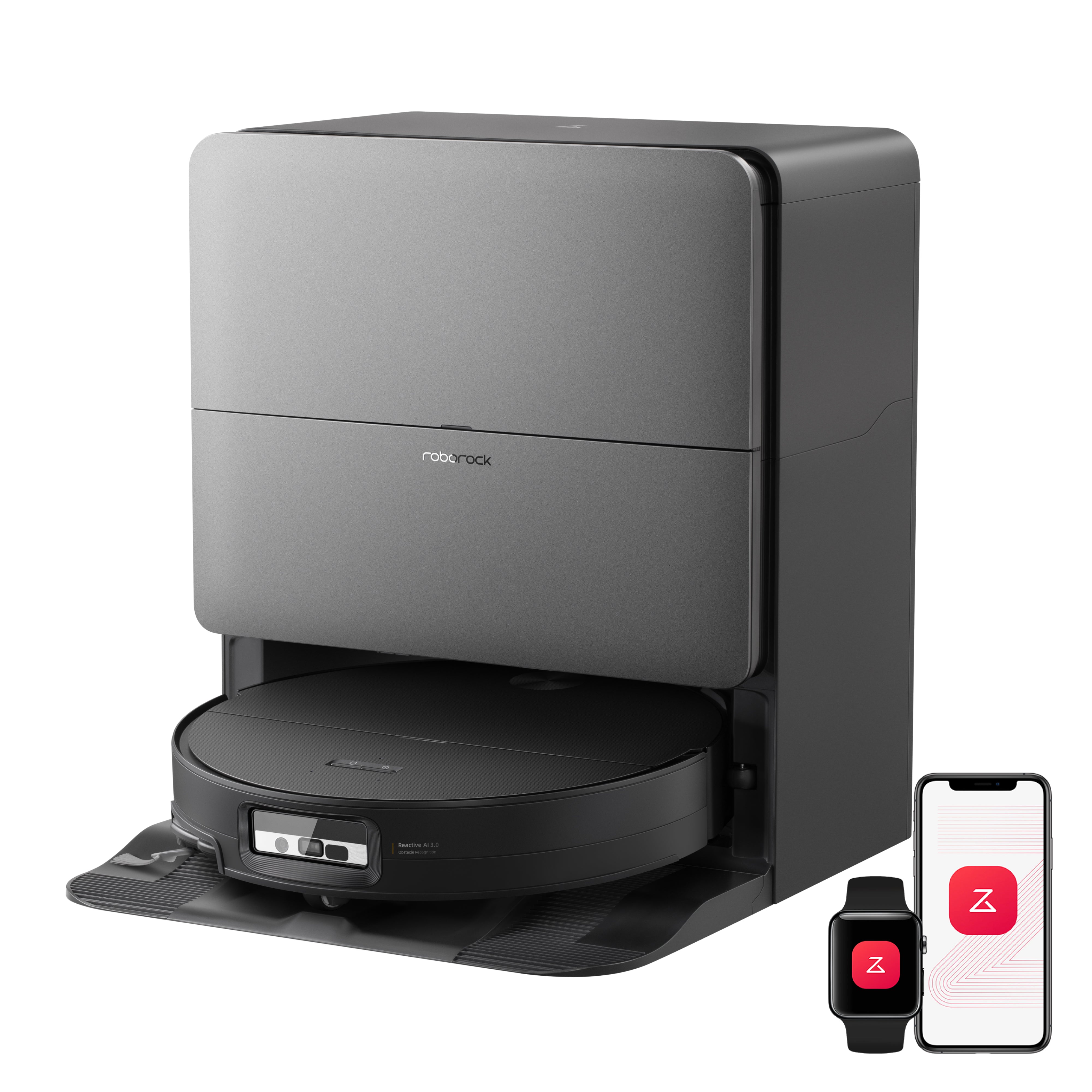
Explore this need in the finder →The Roborock Saros 20 Sonic is a different machine from the standard Saros 20 and Saros 20 Flow, not just a new color or name. Its U.S. listing is one default-title offer, SKU RR-Saros20Sonic5-M1, built around a single VibraRise 5.0 pad that vibrates and extends. Roborock's store page said “Out of stock, coming soon” when checked on October 24, 2026, so the assessment describes a current listed model, not a promise of stock.
Choose it for the single vibrating pad
Roborock lists up to 14 N of mop pressure and 4,000 vibrations per minute for VibraRise 5.0. The pad can extend toward edges, and the manufacturer says the mount detaches automatically when vacuum-only or carpet-first modes are used. Those mechanisms are useful distinctions if you prefer one vibrating cloth and want the robot to remove it before a carpet-first pass. They are not independent stain-removal tests, and the 36,000 Pa suction figure is a manufacturer maximum rather than measured pickup in a home.
The standard Saros 20 uses two rotating pads; Flow uses a powered, continuously refreshed roller with a dirty-water path. Their cleaning routines and care are different. A single pad avoids the Flow's roller and dirty-water channel, but still needs laundering and periodic inspection. Choose by the movement you actually want, rather than treating all three Saros 20 models as interchangeable mopping packages.
Separate the dock wash from water on the floor
Roborock says this RockDock washes the detached pad with water up to 100°C and uses 55°C warm air for full dust-path drying. The first number describes cleaning in the station, not the temperature of water spread across a floor. The exact U.S. manual tells the owner to fill the clean-water tank with cold tap water, and the reviewed materials do not give a numeric mop-cycle water temperature. A request for 60°C or 70°C floor water should therefore not be marked as met just because the dock wash is hot.
There is one package detail I would verify before choosing a plumbing setup. The U.S. product record contains a single Default Title option and the box list names a “Dock Base” and “Dock,” but neither gives the dock model suffix. The manual says the robot is compatible with EWFD55LRR or EWFD56LRR; it does not bind this U.S. SKU to one of them. Because those names distinguish a standard station from an auto-connection version, I would not match the offer to a fixed water supply and drain—or promise a specific tank arrangement—without confirmation of the station actually being sold.
Measure the body and the threshold shape
The product page lists the robot at 13.78 × 13.90 × 3.14 inches (350 × 353 × 79.8 mm). Roborock separately advertises low-clearance access at 3.13 inches through limited compression and warns that scraping can occur. The body is not 3.13 inches tall. For a bed or sofa, measure a hard, repeatable opening and allow room for floor variation, soft skirts, and rugs rather than counting on the compression claim.
The page advertises up to 8.8 cm (4.5 + 4.3 cm) for a double-layer threshold. That is a particular combination of rises and track depth, not a universal single-step limit. A tall sill, narrow track, loose rug edge, or angled approach can behave differently. The published maximum is a screening clue, not evidence that the robot will clear your exact transition.
Do not read the carpet copy past the manual
Roborock advertises app-enabled carpet behavior up to 1.18 inches, and the mount-detachment function can remove the cloth before a carpet-first run. But the exact U.S. manual says not to use the product on high-pile carpets and warns that effectiveness may be reduced on dark carpet. The manual does not define the high-pile boundary. If thick-rug coverage is essential, treat the maker's carpet maximum as unresolved rather than a blanket approval; the automatic detachment feature does not cancel the restriction.
Setup and ownership are still part of the fit
The manual walks through app pairing, but it does not state whether the model supports 2.4 GHz, 5 GHz, or both. An essential Wi-Fi-band requirement is therefore unknown for this exact U.S. configuration. The retracting RetractSense navigation and Reactive AI 3.0 obstacle features are manufacturer descriptions, not proof that cords can safely stay scattered around a room. Roborock instructs owners to clear loose hazards and follow the first route.
The station automates dust emptying, mop washing, drying, and robot refill, but it does not eliminate service. The manual calls for regular cloth and dock care, filter cleaning, and dust-bag replacement; it says the cleaning solution is not included and bars disinfectant, recommending only Roborock's solution. If you want a product with a fully identified dock connection and a documented Wi-Fi band, the standard Saros 20 and Flow have clearer station/network evidence in their separate reviews. The standard model is the dual-pad alternative; Flow is the roller alternative with a manual-confirmed 2.4 GHz limit. Saros 20 Sonic suits a hard-floor home that wants a single extending vibrating pad, accepts unresolved dock and network details, and does not depend on high-pile carpet support.
Sources: Roborock's U.S. product listing, feature page, and U.S. FCC user manual (English sections). Product-page claims are identified as manufacturer claims; no lab testing or ownership is asserted.
Key details at a glance
| Manufacturer-listed maximum suction | 36000 Pa |
|---|---|
| Robot height | 3.14 in |
| Manufacturer-reported dock dimension sequence (axes unspecified) | 16.10 × 17.32 × 18.50 inches (manufacturer order is preserved; width/depth/height labels are not assigned) |
| Published dock mop-cleaning temperature claim | 100 °C |
| Battery capacity | 6400 mAh |
| Mop system | VibraRise 5.0 single extending vibrating pad |
| LiDAR retracts under low furniture | Yes |
| Manufacturer carpet-pile support claim | No |
| Dock empties dust automatically | Yes |
| Conditional two-step threshold claim | 8.8 cm |
Use the exact model’s instructions for operating limits, supplied equipment and version differences.
Sources for this assessment
- Roborock U.S. Saros 20 Sonic product listing
- Roborock U.S. native product and variant record
- Roborock U.S. Saros 20 Sonic feature and specifications page
- Roborock U.S. Saros 20 Sonic support and manual index
- Roborock U.S. Saros 20 Sonic exact-model FAQs
- Roborock Saros 20 Sonic U.S. FCC user manual
- Exact native U.S. offer lead image

Check the fit before choosing the dock.
Compare your furniture clearance, network, floors and the work the station still asks you to do.