
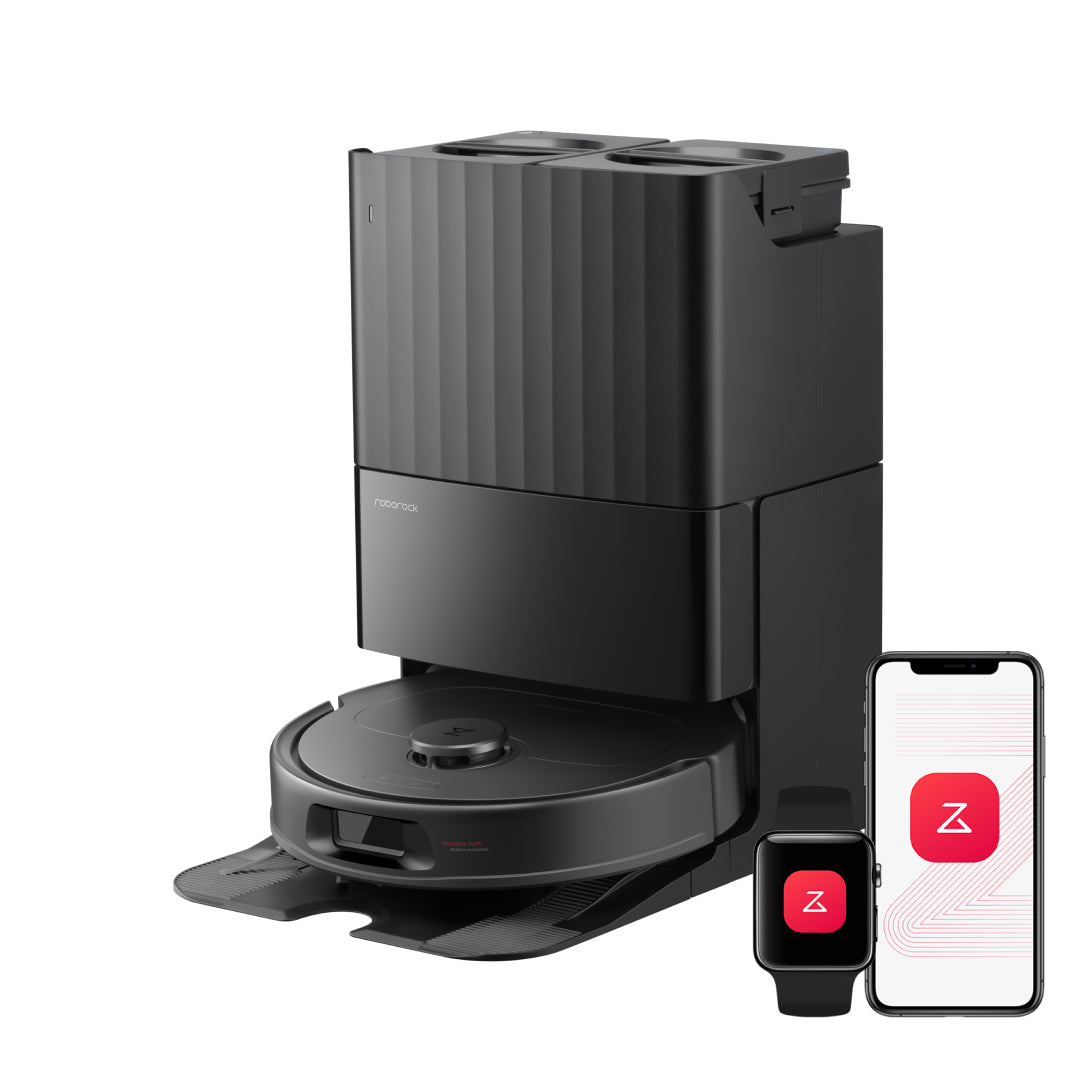
Your needs, this model
Does it fit your priorities?
Does the Roborock QV 35S use dual spinning mop pads rather than a flat cloth or refreshed roller?
Yes. The exact page lists dual spinning, liftable pads; the included EWFD36LRR station washes and cold-air dries them.
Explore this need in the finder →Does the QV 35S dock empty dust and wash and dry its mop pads?
Yes. The exact package page lists auto dust emptying, mop self-washing and cold-air drying; the owner still services the water tanks, bag and tray.
Explore this need in the finder →Can the QV 35S connect when 2.4 GHz Wi-Fi is available?
Yes. The exact page and linked manual specify 2.4 GHz only; a 5 GHz-only network is not a documented setup path.
Explore this need in the finder →Can the QV 35S be used when high-pile carpet support is essential?
No. Its exact linked manual says not to use the robot on high-pile carpet and warns that dark carpets may reduce effectiveness; no maximum pile height is published.
Explore this need in the finder →The Roborock QV 35S is a vacuum-and-mop package built around two rotating pads and a dock that takes on both dust emptying and several mop-care steps. Its exact U.S. listing names a black finish with SKU RR-QV35S5-M2; the linked FCC manual identifies robot RRE0PEE and Empty Wash Fill Dock EWFD36LRR. One caveat before comparing features: the listing currently says “Out of stock, coming soon,” and also displays a generic “product has not been launched yet” notice. Treat this as an identification guide, not confirmation of a live offer; check the exact SKU and current seller status before making a purchase decision.
Spinning pads, rather than a roller
The QV 35S combines vacuuming with dual liftable spinning mop pads. Roborock lists 10,000 Pa maximum suction and says the pads can reach 200 revolutions per minute under an internal test using the extreme water-flow setting. Those are manufacturer claims, not independent pickup or stain-removal results. The useful distinction is the mechanism: this is not a continuously refreshed roller like Roborock’s Qrevo Curv 2 Flow, nor a simple cloth left for the owner to remove and wash. The page also lists an all-rubber floating main brush, an anti-tangle side brush, PreciSense LiDAR mapping and Reactive Tech structured-light obstacle avoidance. Those features describe the hardware and navigation system, not proof that it will avoid every cable or small object in an untidy room.
The dock reduces chores, but does not remove them
The included multifunction station empties dust, washes the mop pads, dries them with cold air and refills the robot’s onboard water tank. Its clean- and dirty-water tanks are removable; the manual does not require a fixed supply or drain. That arrangement is simpler to install than a plumbed station, but still asks you to carry and refill water, discard dirty water, replace a dust bag and periodically clean the tray and filters. You need a reachable outlet and room to service the tanks. The manual calls for a hard, level floor and at least 0.4 m of width, 1.2 m in front and 0.9 m of height around the dock. Those are setup clearances, not the dock’s exterior dimensions.
There is a temperature detail worth keeping unresolved rather than guessing. The native listing description uses the phrase “hot water self-cleaning,” but the feature section describes mop self-washing and cold-air drying without a wash-water temperature. The linked manual says to use cold water in the clean-water tank, and does not give a numeric dock-wash temperature. So a 75°C dock-wash minimum is not documented for this exact offer. Nor is a warm-water floor-mopping cycle: the manual’s cold-water instruction applies to the water supplied for cleaning. Do not transfer numbers or warm-air wording from the similarly named Qrevo S5V; its own page describes a different package.
Measure the route and respect the carpet warning
Roborock lists the robot at 13.78 by 13.9 by 3.80 inches. Measure the lowest furniture opening along the entire route, including a rug edge or a soft skirt that can sag; a nominal 3.8-inch body does not guarantee clearance. The exact QV 35S page claims up to 2 cm of threshold crossing. That is a maker maximum, not a promise for a sharp doorway strip or a threshold approached beside a rug.
The manual explicitly says not to use the robot on high-pile carpet and warns that effectiveness may be reduced on dark carpet. Automatic mop lifting and app carpet strategies do not override that limit, and the sources do not publish a maximum supported pile height. The manual also says not to operate the machine when liquid or sticky material is on the floor. Think of the mop as routine hard-floor maintenance, not wet-spill pickup. Before the first mop run, the manual directs three vacuum-only passes to limit dirt accumulating on the cloths. Use cold water in the clean tank, avoid disinfectant, and use only a Roborock-recommended cleaning solution if adding a cleaner. After rinsing its washable filter and dustbin, the manual asks for at least 24 hours of drying before reinstalling them.
Network and daily fit
The product page and manual support 2.4 GHz Wi-Fi only; a 5-GHz-only home network is not a confirmed fit for app setup. LiDAR can build maps for up to four floors according to Roborock, and the app supports schedules and no-go areas, but the robot still benefits from a clear first run. Keep cables and fragile objects off its path and observe how it handles room transitions before relying on recurring unattended schedules. Its 5,200 mAh typical battery specification is in the manual; the page’s faster-charging claim is not an independently measured run-time result.
What is different from its closest Roborock comparisons?
The QV 35A shares the RRE0PEE robot and EWFD36LRR dock codes but has its own listing and a lower 8,000 Pa suction claim; the QV 35S listing says 10,000 Pa. Both pages describe spinning pads, dust emptying, washing, cold-air drying and water refilling. The Qrevo S5V is another separate listing on the same model-code family: its own page claims 12,000 Pa and warm-air drying. These figures and descriptions should remain attached to the exact offer rather than being blended because the robots look alike or share manual codes. For a simpler Roborock option, compare the Q10 X5 if hand-emptying and a non-washing mop arrangement fit your routine; its standard package is a different dock setup. Choose the QV 35S only if you want spinning pads and a tank-service dock, can accept the network and carpet restrictions, and can confirm the exact SKU is actually offered. Start with the Roborock QV 35S U.S. listing and its model-specific support entry and linked FCC manual for current instructions and availability.
Key details at a glance
| Manufacturer-listed maximum suction | 10000 Pa |
|---|---|
| Robot height | 3.8 in |
| Maximum manufacturer-listed threshold claim | 2 cm |
| Battery capacity | 5200 mAh |
| Mop system | Dual spinning or rotating mop pads |
| Warm water supplied for the robot's mop cycle | No |
| LiDAR retracts under low furniture | No |
| 2.4 GHz Wi-Fi supported | Yes |
| 5 GHz Wi-Fi supported | No |
| Manufacturer carpet-pile support claim | No |
| Dock water hookup | Removable dock water tanks |
| Fixed water supply and drain required | No |
| Dock empties dust automatically | Yes |
Use the exact model’s instructions for operating limits, supplied equipment and version differences.
Sources for this assessment
- Roborock U.S. QV 35S product page and feature/specification sections
- Roborock native U.S. product and black variant record
- Roborock QV 35S FCC User Manual support article
- Roborock QV/QR Series FCC/IC English user manual linked from the exact QV 35S support article
- QV 35S black lead product render; reused exact source bytes from QV 35A archive

Check the fit before choosing the dock.
Compare your furniture clearance, network, floors and the work the station still asks you to do.