
Your needs, this model
Does it fit your priorities?
Will the Qrevo Curv fit beneath furniture with 4.25 inches of clear height?
The product page lists a 4.1-inch robot height, so the published dimension is below 4.25 inches. Measure the lowest point, including trim, sagging fabric and floor transitions; a small nominal margin is not a navigation guarantee.
Explore this need in the finder →Does the Qrevo Curv dock wash the mop pads with water heated to at least 75°C?
Yes. Roborock lists up to 75°C hot-water mop washing for the Curv dock. That figure describes dock washing, not warm water being delivered to the robot during floor mopping.
Explore this need in the finder →Can the Qrevo Curv connect on a 2.4 GHz Wi-Fi network?
Yes. The product information and manual specify 2.4 GHz Wi-Fi; 5 GHz is not supported. The companion app is part of the intended operating setup.
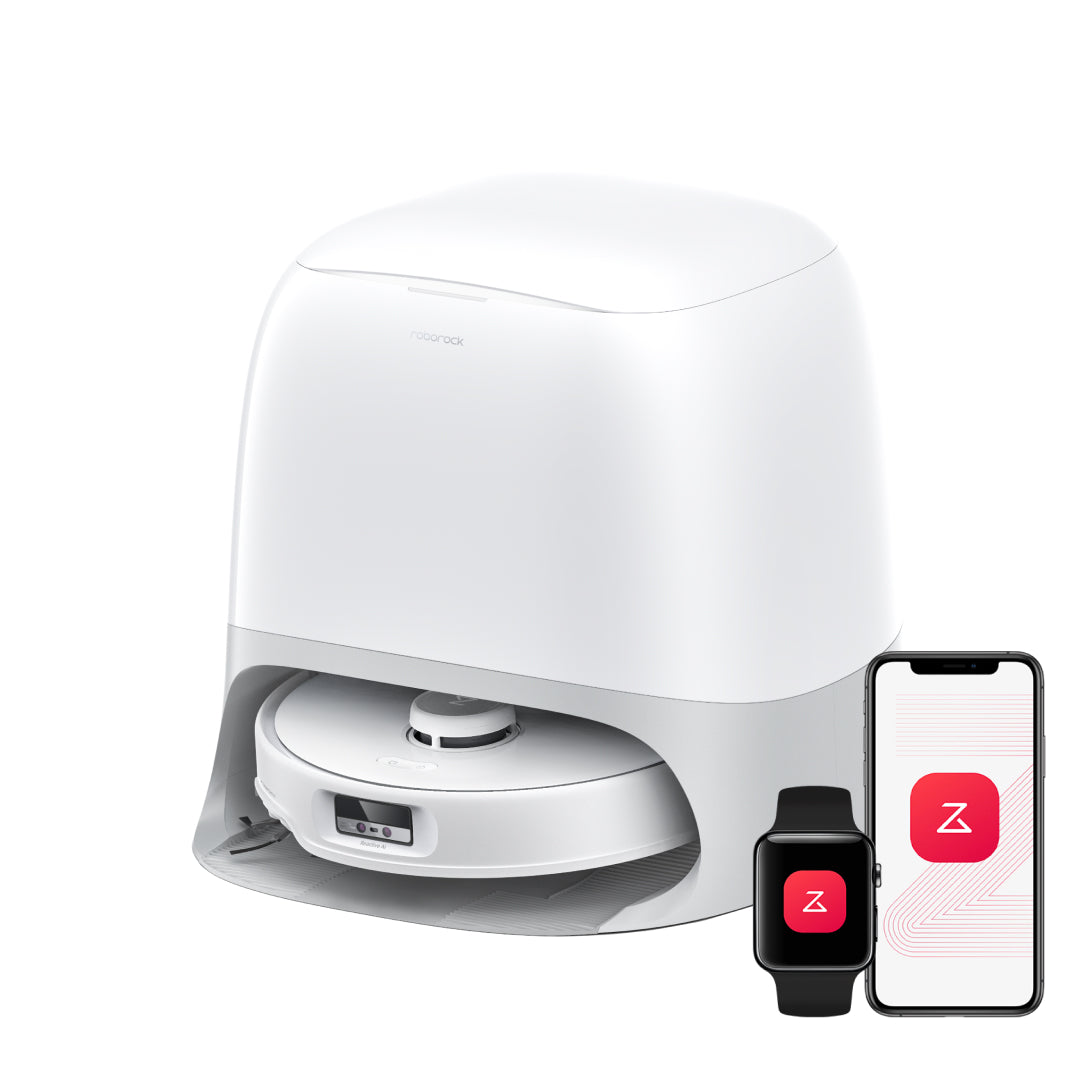
Explore this need in the finder →The Roborock Qrevo Curv is a high-automation robot vacuum and mop for a home where the 4.1-inch-tall robot can reach its intended rooms. Its supplied dock empties dust, washes the two spinning mop pads with heated water, dries them and refills the robot's water tank. The dock, rather than an owner, handles several repetitive chores; it does not remove the need to empty dirty water, top up clean water, replace the dust bag and wash the station itself.
Its most important comparison is the Qrevo CurvX. The original Curv is taller, uses a fixed LiDAR turret and has a 75°C dock-wash specification. The CurvX lowers to 3.14 inches, retracts its LiDAR and adds an 80°C mop wash plus warm water supplied during the robot's mopping stage. Those are concrete changes to fit and routine, not proof that the more powerful-sounding model cleans better in every room.
Measure the robot's route before planning around the dock
The listed robot dimensions are 13.9 by 13.7 by 4.1 inches. A furniture opening near four inches is not a safe fit just because it sounds close: measure from the floor to the lowest stable obstruction, and allow for rugs, trim, soft sofa skirts and uneven flooring. Roborock's published CurvX comparison explains why the distinction matters: its retractable LiDAR lets that model enter lower spaces. The Curv's standard raised sensor does not collapse into its body, so use the full 4.1-inch height in your room plan.
Roborock rates the Curv at up to 18,500 Pa of suction, a manufacturer maximum rather than a direct measure of household pickup. Its main and arc-shaped side brushes are designed to reduce hair snags, and the mop arm can extend near edges; brush inspection is still part of ownership.
The chassis can lift to deal with obstacles, and the company publishes a maximum double-layer threshold figure of four centimeters. Treat that as a controlled maximum, not permission to ignore a tall track or uneven floor. If a specific doorway is the deal-breaker, measure it rather than assuming the published maximum applies.
The station washes mop pads; the robot's floor water is a separate choice
The multifunction dock washes the mop pads with water heated up to 75°C, then uses warm air for drying. It also empties the robot's dustbin and refills its onboard clean-water tank. Roborock's “up to seven weeks” dust-emptying figure is a manufacturer estimate, not a fixed maintenance calendar; household debris, pets and cleaning frequency change how quickly the disposable bag fills.
Do not confuse hot mop washing with warm water mopping. Roborock's own comparison says the CurvX receives warm water in the robot's tank for its mop cycle; that is an upgrade beyond the original Curv's page. If warm water at the floor is essential, the Curv is not the configuration to choose. If you simply want automatic pad washing and a heated dock wash, the Curv's listed 75°C system covers that separate need.
The dual spinning pads suit people who want vacuuming and mopping in a schedule, but they make a wet-dock routine unavoidable. You will need to fill the clean-water tank, pour out dirty water and occasionally wash the dock tray and filter. The pads are washable textiles, not disposable cartridges; the robot still cannot clean stairs or places its round body cannot reach.
Set aside floor space, network access and camera preferences
The dock is about 17.7 inches wide, deep and tall. The manual asks for a hard, flat floor against a wall, with roughly 0.46 meters of side-to-side width, 1.2 meters of depth and 0.9 meters of vertical clearance around the specified placement. A tight cabinet alcove, rug under the base or hanging power lead can interfere with docking. Keep the route back to the station open and put the dock where you can reach both tanks.
The manual specifies 2.4GHz Wi-Fi; 5GHz is not supported. The Roborock app is part of the intended setup for maps and schedules. Camera-based recognition, video calling and pet-search may suit households that want remote views, but check privacy settings before using those features around children, guests or sensitive spaces.
Carpet language needs care, and maintenance remains real
There is an unresolved conflict in Roborock's own guidance: the US Curv marketing page describes mid-to-long-pile carpet cleaning when the relevant app setting is enabled, while the US manual says not to use the product on high-pile carpet. The company does not define those terms consistently on the materials reviewed here. If your home depends on high-pile coverage, do not assume the feature copy overrides the manual caution; seek clarification for your exact carpet or choose a model with unambiguous support. Roborock also warns that dark carpet can reduce effectiveness.
For a new mop routine, the manual advises vacuuming the floors at least three times before the first mopping cycle to limit dirt buildup in the cloths. It calls for cleaning the washable filter every two weeks and replacing it every six to twelve months; mop cloths should be cleaned as needed and replaced every one to three months. The manufacturer says not to use disinfectant and to use only its recommended cleaning solution. Switch the machine off and unplug the dock before maintenance, and do not rinse the robot or dock.
Who should choose it?
Choose the Qrevo Curv when its 4.1-inch body clears every required route and you value a dock that washes pads at up to 75°C, dries them and handles dust and water transfers. Choose the CurvX instead if low furniture, warm water supplied to the mop cycle, or an 80°C dock wash is an essential requirement. Consider a simpler vacuum-only robot if you do not want a mop station, water tanks and reusable cloths at all. Neither Curv should be selected for a high-pile-carpet requirement until Roborock resolves the conflict between its marketing language and manual.
Key details at a glance
| Manufacturer-listed maximum suction | 18500 Pa |
|---|---|
| Robot height | 4.1 in |
| Robot weight | 8.6 lb |
| Manufacturer-reported dock dimension sequence (axes unspecified) | 17.7 × 17.7 × 17.7 |
| Published dock mop-cleaning temperature claim | 75 °C |
| Maximum manufacturer-listed threshold claim | 4 cm |
| Battery capacity | 6400 mAh |
| Mop system | Dual spinning or rotating mop pads |
| Warm water supplied for the robot's mop cycle | No |
| LiDAR retracts under low furniture | No |
| Manufacturer-listed object-recognition types | 62 types |
| 2.4 GHz Wi-Fi supported | Yes |
| 5 GHz Wi-Fi supported | No |
| Dock water hookup | Removable dock water tanks |
| Fixed water supply and drain required | No |
| Dock empties dust automatically | Yes |
| Maximum manufacturer-claimed base dust capacity window | 49 days |
Use the exact model’s instructions for operating limits, supplied equipment and version differences.
Sources for this assessment
Check the fit before choosing the dock.
Compare your furniture clearance, network, floors and the work the station still asks you to do.