
Your needs, this model
Does it fit your priorities?
Does the Q7 L5 have a dock that empties dust automatically?
No. Its exact US package includes a standard charging dock; empty the robot's dustbin by hand.
Explore this need in the finder →Does the Q7 L5 use a flat cloth mop with three water-flow settings?
Yes. Roborock lists a removable cloth and three water-flow levels; you fill the robot tank and wash and air-dry the cloth yourself.
Explore this need in the finder →Can the Q7 L5 connect to a 2.4 GHz Wi-Fi network?
Yes. Its linked FCC manual supports 2.4 GHz only; a 5 GHz-only network is not compatible.
Explore this need in the finder →Will the Q7 L5 fit beneath a four-inch opening?
Its listed height is 3.89 inches, leaving little margin. Measure the lowest point along the whole route, including rugs and sagging upholstery.
Explore this need in the finder →Can the Q7 L5 be shortlisted if high-pile carpet support is essential?
No. The exact Q7 Series manual says not to use the robot on high-pile carpet and notes that performance may be reduced on dark carpet.
Explore this need in the finder →Does Roborock document a Q7 L5 threshold-crossing minimum?
No threshold figure was found on the exact L5 page or manual. Do not apply the Q7 M5+ claim to this separate package.
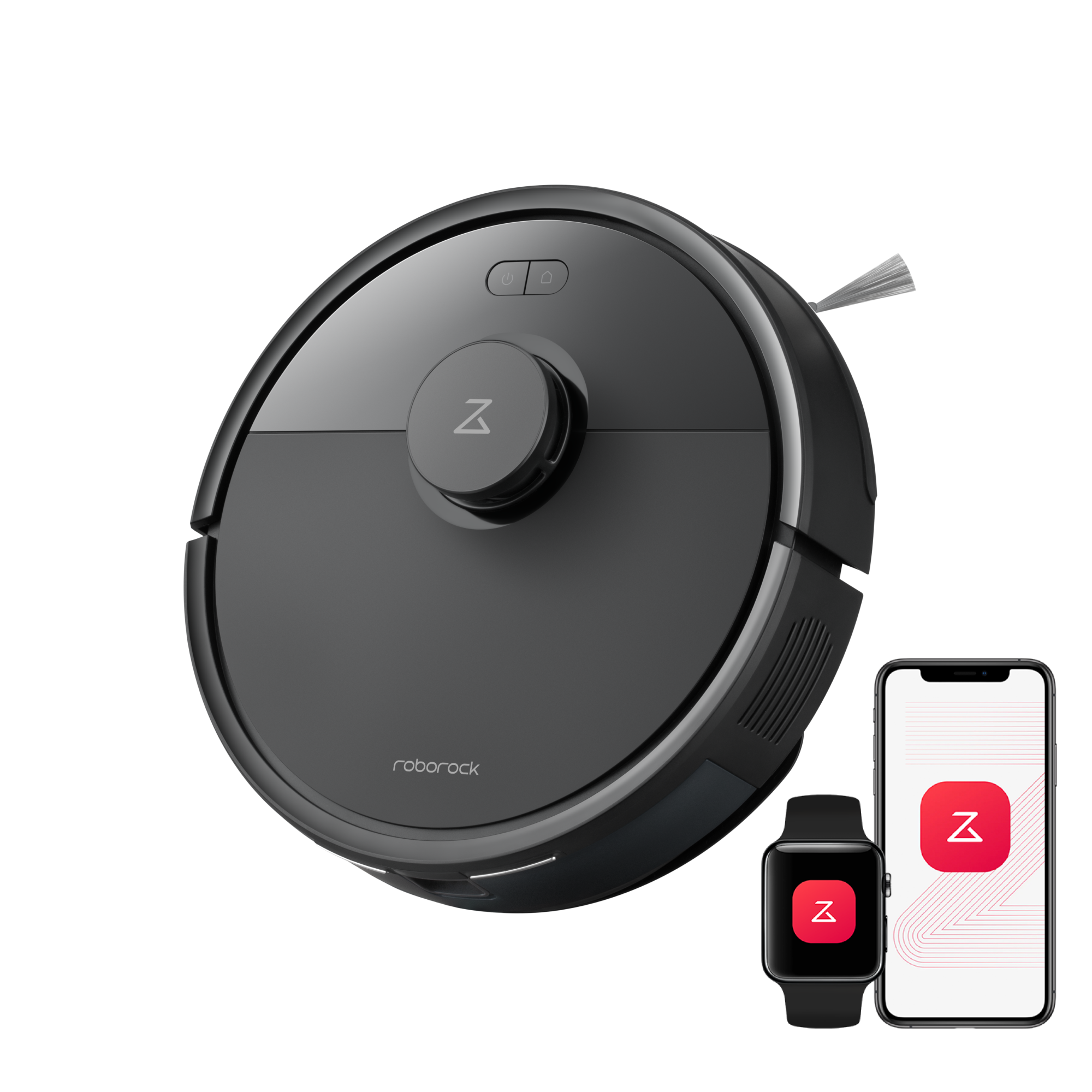
Explore this need in the finder →The Roborock Q7 L5 is a basic charging-dock vacuum-mop, not the self-emptying Q7 M5+. Its appeal is a relatively compact station and the choice to empty the robot’s own bin yourself. The robot combines LiDAR mapping, an 8,000 Pa manufacturer suction rating, a dual anti-tangle brush design and a flat cloth mop with three water-flow choices. That package fits someone who wants scheduled room cleaning and occasional damp wiping without paying for, finding space for or maintaining a dust-bag dock. It is a poor fit if automatic dust disposal, a documented threshold-crossing minimum or high-pile-carpet support is a must.
A charging dock keeps the package simple
The included SPCDZ03RR dock recharges the robot; it does not empty the dustbin, wash the mop or dry it. You take the combined dustbin-and-water-tank unit out of the robot to empty dust, and refill it when you want to mop. The dock is only 6.29 inches wide, 2.75 deep and 3.98 high according to Roborock’s listing, so it takes less floor area than the larger Q7 M5+ RockDock Plus. But station size is only one part of the trade: this model puts every bin-emptying chore back on you. If frequent pet hair fills the bin quickly, compare the Q7 M5+ instead of assuming the L5 includes the same “plus” convenience.
The exact dimensions are 12.79 by 12.79 by 3.89 inches. That height matters for furniture. A four-inch gap gives only a small nominal margin; measure rug edges and upholstery sag along the full route. The charging dock is small, but its manual still asks for at least 1.6 feet at either side and 4.9 feet in front, and it should sit on a hard, level floor with good Wi-Fi coverage.
8,000 Pa is a specification, not a pickup test
The 8,000 Pa HyperForce figure is Roborock’s maximum suction specification, which the product page says comes from manufacturer testing. It is not an independent measurement of carpet pickup, fine dust removal or pet-hair performance. The Q7 M5+ is listed at 10,000 Pa, but that higher number alone does not establish which robot will clean a particular rug better. The L5 also has a JawScrapers anti-tangle main-brush design and an anti-tangle side brush. Roborock describes reduced tangling, including a zero-percent side-brush hair-tangling claim; treat that as a company-reported result, not a promise that no hair will need removal.
The mop requires a hands-on routine
The flat cloth attaches to the combined dustbin and water tank, with three adjustable water-flow settings in the app. This is a light maintenance wipe, not a powered scrubber or a dock-washed pair of spinning pads. The manual says to vacuum the floor at least three times before the first mop cycle, fill the tank with tap water, dampen and wring the cloth, then attach it. After cleaning, empty unused water promptly and wash and air-dry the cloth. Don’t leave a wet pad on the floor or add an unapproved cleaning chemical. If your deal-breaker is a dock that washes and dries pads, look at a different dock class; the L5’s station only charges.
Mapping helps, but it does not recognize every hazard
PreciSense LiDAR maps rooms and supports up to three floor maps, schedules and app-directed cleaning. A map helps with repeatable room coverage, but it is not proof of camera-based cable or pet-waste recognition: the exact L5 page and manual do not identify a camera obstacle system. Pick up loose cords, socks and small objects before unattended runs, then follow the first route. Roborock lists carpet boost as a setting, but the Q7 Series manual explicitly says not to use the robot on high-pile carpet and cautions that effectiveness can drop on dark carpet. A boost setting does not override those limits.
The manual identifies the robot as RRA0TAC and its standard charging dock as SPCDZ03RR; it lists a 14.4 V, 3,200 mAh typical battery. Wi-Fi is 2.4 GHz only, so a 5 GHz-only network is not supported. The product page does not give this exact Q7 L5 configuration a threshold-crossing figure. Do not borrow the Q7 M5+’s separate two-centimeter claim when a threshold minimum is essential; unknown is not a guarantee.
Choose by chores and operating constraints
The official US listing offers black and white Q7 L5 variants with the same robot and charging-dock package. Choose the L5 if a narrow charging station and manual bin emptying are acceptable, the cloth mop will be used as a light-maintenance tool, and your home has compatible floor types and 2.4 GHz Wi-Fi. Choose Q7 M5+ if you want dust auto-emptying and its documented two-centimeter maximum claim; its bag dock still does not wash the cloth. The M5+ is also rated at 10,000 Pa by Roborock, but that is not an independent head-to-head result. For a vibrating mop, compare Q10 S5; for automatic pad lifting, compare Q10 X5. If you require high-pile use, hands-free mop washing or a confirmed threshold rating, neither Q7 configuration should be treated as a match on the evidence here.
For setup and exact box contents, check Roborock’s Q7 L5 product page, its Q7 Series FCC manual, and the Q7 family comparison. Measure the route and dock site before choosing; the low-maintenance question here is not just which robot vacuums, but which chores its station leaves for you.
Key details at a glance
| Manufacturer-listed maximum suction | 8000 Pa |
|---|---|
| Robot height | 3.89 in |
| Robot weight | 7.28 lb |
| Manufacturer-reported dock dimension sequence (axes unspecified) | 6.29 × 2.75 × 3.98 |
| Battery capacity | 3200 mAh |
| Mop system | Fixed cloth with three water-flow levels |
| LiDAR retracts under low furniture | No |
| 2.4 GHz Wi-Fi supported | Yes |
| 5 GHz Wi-Fi supported | No |
| Manufacturer carpet-pile support claim | No |
| Dock water hookup | Standard charging dock; manual bin emptying; no dock water service |
| Fixed water supply and drain required | No |
| Dock empties dust automatically | No |
Use the exact model’s instructions for operating limits, supplied equipment and version differences.
Sources for this assessment

Check the fit before choosing the dock.
Compare your furniture clearance, network, floors and the work the station still asks you to do.