
Your needs, this model
Does it fit your priorities?
Do you want a vacuum-only robot with bagged automatic dust emptying rather than a mop robot or charge-only package?
Yes. W155020 combines the vacuum-only Max 705 Vac with an AutoEmpty dust dock; the robot does not mop.
Explore this need in the finder →Will this 4.1-inch robot fit a 4.25-inch opening in a home with only 5 GHz Wi-Fi?
The published robot height is below 4.25 inches and iRobot lists both 2.4 and 5 GHz for the Max 700 series, though a route still needs practical clearance margin.
Explore this need in the finder →Does this package satisfy a requirement for a warm mop-wash station or documented high-pile carpet limit?
No. It is vacuum-only, and the reviewed exact materials do not publish either a mop-wash temperature or a high-pile limit; those requirements should exclude it.
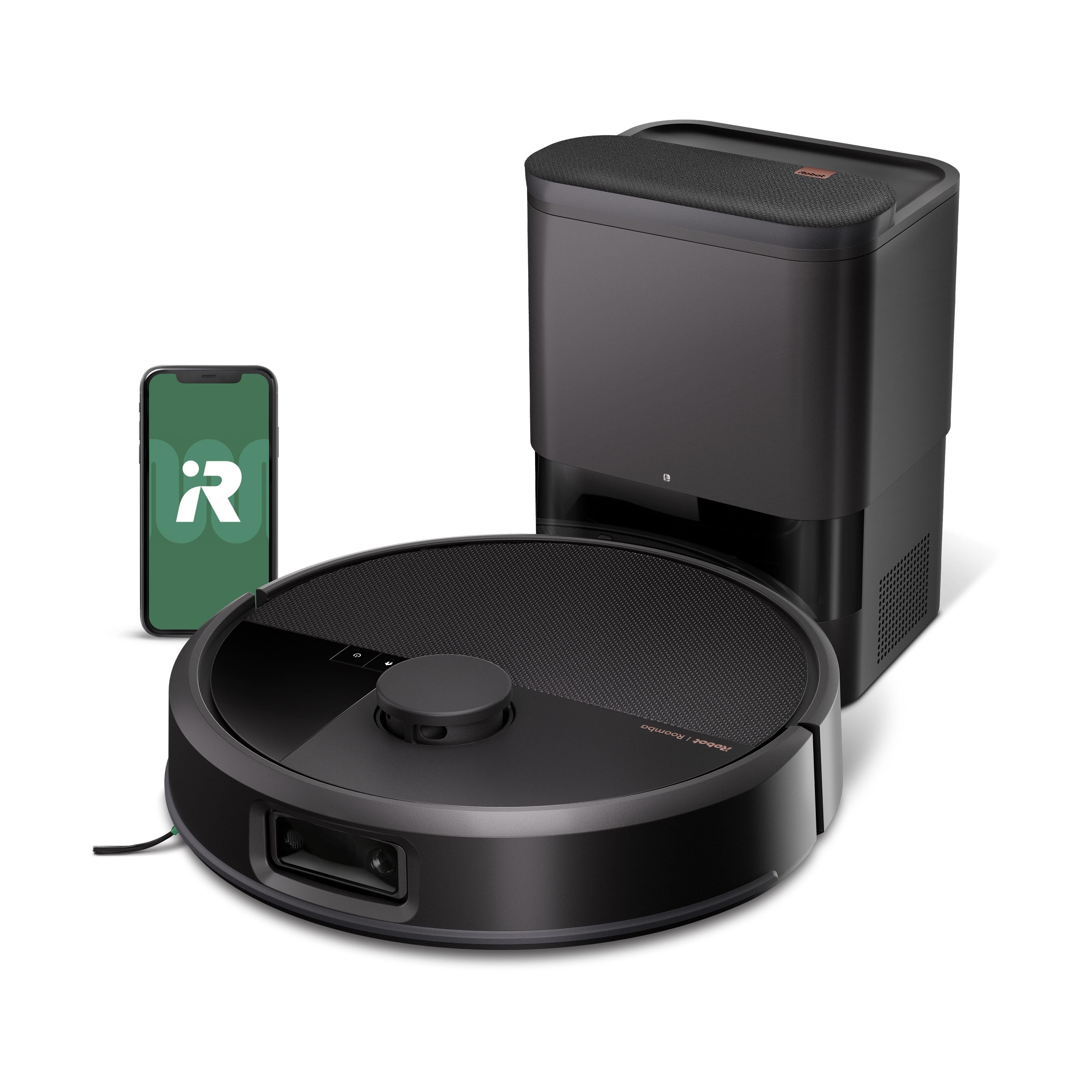
Explore this need in the finder →The Roomba Max 705 Vac + AutoEmpty Dock (U.S. SKU W155020, black) is a vacuum-only robot for people who want scheduled floor cleaning and automatic dust transfer without adding a mop routine. It has a noticeably more involved navigation and obstacle-recognition system than the basic mapped combinations in iRobot’s 105 line, but the main practical distinction is simple: this model vacuums and empties its bin; it does not wet-mop, wash a pad, or manage dock water. The matching white W155220 listing is a finish variant in the same 705 Vac product group.
Vacuum-only means fewer chores, not no chores
The W155020 package combines two rubber multi-surface brushes, an edge-sweeping brush, carpet boost, and an AutoEmpty dock. The brushes are designed to flex against different floor surfaces, and iRobot promotes them for pet hair and everyday debris. Its headline “180x more” power-lifting suction is a manufacturer comparison with Roomba 600-series models in spot-clean mode at full battery, not a measured advantage over today’s competing robots. iRobot does not publish an absolute Pa figure for this configuration, so that comparison cannot answer a request for a particular suction threshold.
The dock transfers dry debris from the robot bin into a sealed disposal bag; iRobot advertises up to 75 days before bag attention and says the bag contains particles as small as 0.7 microns. Both numbers describe manufacturer claims, not guaranteed intervals or independent filtration testing. Household size, pets, debris and cleaning frequency affect how soon you need to intervene. The listed U.S. box includes the robot, AutoEmpty dock, one extra bag and one extra filter. There is no mop pad or water tank in this vacuum-only set.
Mapping and obstacle recognition suit scheduled rooms
ClearView Pro LiDAR maps the floor plan, while PrecisionVision AI is described as recognizing objects including cords, socks and pet waste. The Roomba Home app supports room and zone cleaning, keep-out and clean zones, multiple floors, four suction levels and extra passes in high-traffic areas. iRobot says it can store up to five maps and gives an eight-minute mapping claim for a 1,000-square-foot space. These are maker-described functions, not a guarantee that every small object or pet accident will be noticed. Pick up loose cords and toys before routine runs, check the first map and schedule, and do not rely on a camera claim as a substitute for keeping the floor safe.
One useful setup difference is Wi-Fi. iRobot’s compatibility chart lists both 2.4 GHz and 5 GHz support for the Max 700 series, and the product page requires its app and a Wi-Fi connection for initial setup. That makes the 705 Vac a plausible option in a 5-GHz-only home where iRobot’s 105 Combo pages specify 2.4 GHz. After setup, the app offers more precise control than the two buttons on the robot; if you prefer not to use a phone or connected routines, consider whether those app-dependent mapping and scheduling features are actually valuable to you.
Measure the route before choosing the Max
iRobot lists the W155020 robot at 13.8 by 14.0 by 4.1 inches and 7.5 pounds, with a lithium-ion battery. The 4.1-inch body is the constraint under sofas, cabinets and bed frames; measure the lowest hard point along the entire path and leave margin for floor changes and rugs. It is not a low-profile choice. iRobot’s U.S. compatibility chart lists a 5,000 mAh LFP battery, up to 120 minutes on hard floors, a 4.5-hour recharge and a 275 ml dry bin for the 705 Vac series. The company says the runtime figure was tested in its Home Test Lab and actual time can vary; it is not an independent result. The reviewed sources do not publish a threshold-crossing maximum or an absolute Pa suction rating for this exact package. Do not infer those values from another Max model or from an app illustration.
Its AutoEmpty dock still needs a stable spot near power, with enough room for the robot to approach and leave. The bag makes routine dust disposal less frequent, but the robot’s bin, filter, brush ends, caster and charging contacts remain service items. iRobot’s support instructions call for regular bin and brush care; pet hair can increase that work even when the dock handles the bulk transfer. The 75-day bag interval does not mean 75 days without inspection.
Who should pick the 705 Vac?
Choose it when you want a mapped, vacuum-only schedule, automatic bagged dust emptying, and app-based room or zone control—and your route can clear a 4.1-inch robot. Its Wi-Fi support is more flexible than the 2.4-GHz-only 105 Combo, and the object-recognition claim may be useful in a lived-in home, though it is not a promise of perfect avoidance. Treat the Max’s suction multiplier as a comparison against an older Roomba baseline, not a lab result.
Choose the Roomba 105 Combo instead if a removable flat microfiber mop is a real need. The Y314020 charge-only package leaves dust and cloth care to you; Y354020 adds an AutoEmpty dock while retaining manual pad care. Neither is an AutoWash system. If you want a robot that washes or dries a mop, start with a different exact package rather than assuming the 705 Vac’s dust dock can do it. If your essential requirement is high-pile carpet, a published threshold figure, or a particular measured suction level, the reviewed Max 705 Vac evidence does not settle that question, so it should not be a confident match.
Manufacturer references: Roomba Max 705 Vac, black W155020, white W155220 finish listing, iRobot model and network compatibility chart, and Max 705 Vac support and care instructions.
Key details at a glance
| Robot height | 4.1 in |
|---|---|
| Robot weight | 7.5 lb |
| Battery capacity | 5000 mAh |
| Mop system | Vacuum-only; no mop system |
| Warm water supplied for the robot's mop cycle | No |
| 2.4 GHz Wi-Fi supported | Yes |
| 5 GHz Wi-Fi supported | Yes |
| Dock water hookup | Dust-empty dock; no dock water service |
| Fixed water supply and drain required | No |
| Dock empties dust automatically | Yes |
Use the exact model’s instructions for operating limits, supplied equipment and version differences.
Sources for this assessment
- iRobot US Roomba Max 705 Vac + AutoEmpty Dock, Black W155020
- iRobot US Roomba Max 705 Vac + AutoEmpty Dock, White W155220
- iRobot All Roomba Features and Compatible Parts (US support)
- iRobot Max 705 Vac + AutoEmpty support and maintenance page
- Official multilingual Roomba 705 Max Vac + AutoEmpty owner manual
- iRobot manuals directory containing the 705 Max Vac family manual
Check the fit before choosing the dock.
Compare your furniture clearance, network, floors and the work the station still asks you to do.